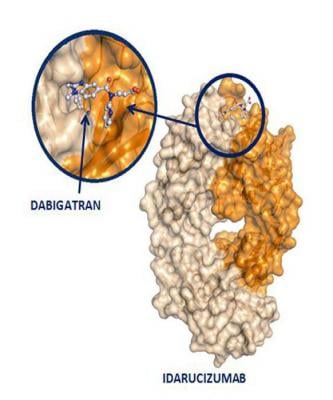
July 7, 2015 - Results from an interim analysis of the Phase III RE-VERSE AD patient study demonstrate that 5 g of idarucizumab immediately reversed the anticoagulant effect of dabigatran (Pradaxa) in patients requiring urgent anticoagulant reversal. No safety concerns relating to idarucizumab were identified. The results have been simultaneously published in the New England Journal of Medicine (NEJM) and presented at the International Society of Thrombosis and Haemostasis 2015 Congress in Toronto, Canada.
"The interim analysis from RE-VERSE AD is important for healthcare professionals as it provides the first insights into the effect of a specific reversal agent to a non-vitamin K antagonist oral anticoagulant during real-world emergency situations," said Charles Pollack, M.D., professor of emergency medicine at the Perelman School of Medicine, University of Pennsylvania in Philadelphia, and lead investigator of the patient study. "As observed in earlier research in volunteers, idarucizumab reversed the anticoagulant effect of dabigatran in patients completely within minutes, even in those rare critical care situations studied in RE-VERSE AD. These data demonstrate that use of idarucizumab can help physicians focus on other vital aspects of emergency management beyond anticoagulant reversal in dabigatran-treated patients."
RE-VERSE AD is designed to evaluate the types of patients and real-world situations healthcare professionals may see in emergency settings. The broad inclusion criteria ensure that even the most severely ill or injured patients (e.g. patients with sepsis or a severe intracranial hemorrhage) who require urgent reversal of dabigatran may be enrolled in the study. Patients were categorized into two groups: (A) patients with uncontrolled or life-threatening bleeding complications, e.g. intracranial hemorrhage or severe trauma after a car accident (Group A, n= 51) - or (B) patients requiring emergency surgery or an invasive procedure, e.g. surgery for an open fracture after a fall (Group B, n=39). The primary endpoint of the study is the degree of reversal of the anticoagulant effect of dabigatran achieved by 5 g idarucizumab within 4 hours measured by diluted thrombin time (dTT) and ecarin clotting time (ECT).
The interim analysis from RE-VERSE AD included data from 90 patients in emergency settings who were taking dabigatran and required reversal. Of the 81 patients that presented with elevated anticoagulation levels at baseline as measured with ECT, results showed:
- The study met its primary endpoint, achieving 100 percent maximum reversal as median value across all patients;
- Reversal was evident immediately after administration of the first vial of idarucizumab and was complete in all but one patient;
- After 4 and 12 hours, laboratory tests showed normal coagulation levels in almost 90 percent of patients;
- Normal blood clotting (hemostasis) during surgery was reported in 92 percent of the patients that required surgery or invasive procedures;
- There was no signal of a pro-coagulant effect following administration of idarucizumab;
- Thrombotic events occurred in five patients, none of whom were receiving antithrombotic therapy at the time of the event; and
- There were 18 deaths overall. Mortality within 96 hours of study enrollment appeared to be related to the original reason for emergency admission to the hospital, while all later events appeared to be related to co-morbidities.
For more information: www.boehringer-ingelheim.com

 May 05, 2026