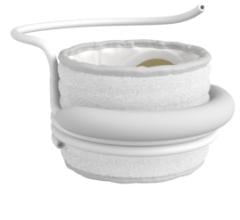
December 28, 2011 – Edwards Lifesciences announced two-year results of a pivotal clinical study of inoperable patients with severe aortic stenosis treated with the Edwards Sapien transcatheter heart valve, which was approved in November by the U.S. Food and Drug Administration (FDA). These data from The PARTNER Trial (Cohort B) demonstrated a widening survival benefit for Sapien valve patients at two years, including significantly less time spent in the hospital. The new results were presented at the 23rd annual Transcatheter Cardiovascular Therapeutics (TCT) scientific symposium.
At one year, all-cause mortality was 30.7 percent for transcatheter aortic valve replacement (TAVR) and 50.7 percent for standard therapy as published last year in The New England Journal of Medicine. At two years, mortality for patients treated with TAVR remained superior to standard therapy, with the mortality curves diverging further to demonstrate rates of 43.3 percent versus 67.6 percent, respectively. There was a higher neurologic event rate in the transcatheter group as compared to standard therapy.
"The mortality advantage grew significantly at two years. Remarkably, the median days alive outside the hospital was 699 days in TAVR patients and 355 days for standard therapy patients - a difference of nearly one year. This demonstrates that without the Sapien valve, patients that survived spent significantly more time in the hospital," said Raj Makkar, M.D., associate director of the Cedars-Sinai Heart Institute.
In addition to the clinical advantages, the new data demonstrated that the improvement in hemodynamic performance was sustained at two years.
This trial studied 358 patients with severe, symptomatic aortic stenosis deemed inoperable for traditional open-heart surgery. Patients were evenly randomized to receive either the Edwards Sapien valve or standard therapy.
For more information: www.edwards.com
 July 02, 2026