News | Heart Failure | July 22, 2015

Heart Failure Readmissions Reduced With New Optimization Approach

CRT device with adaptive algorithm found to reduce heart failure readmissions 16.6 percent over 30 days

heart failure, Adaptive CRT trial, AdaptivCRT algorithm, readmissions

July 22, 2015 — Heart failure patients had a significantly lower chance of being readmitted within 30 days of discharge when treated with a cardiac resynchronization therapy device (CRT) equipped with an algorithm to automatically deliver and adjust therapy, according to a recent study in JACC: Heart Failure. The study compared these patients to those receiving the standard CRT optimized with echocardiography.

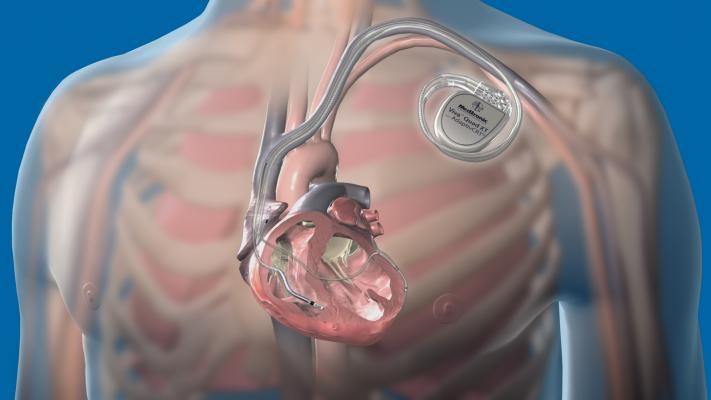
A CRT device is a defibrillator that sends electrical impulses to the heart to help the chambers beat in synchronization and improves the heart's pumping function. It is an established treatment for patients with heart failure, and while it has been proven to provide many benefits, including an improved quality of life and reduced risk of death, not all patients respond to CRT.

In this study, researchers analyzed data from the Adaptive CRT trial to determine rates of hospital readmissions for heart failure patients with a CRT device. For heart failure hospitalizations the 30-day readmission rate was 19.1 percent in patients with the AdaptivCRT algorithm and 35.7 percent in patients with echo. For all-cause hospitalization, the 30-day readmission rate was 14.8 percent with the algorithm compared to 24.8 percent with echo. The risk reduction for readmission was also signficantly reduced beyond 30 days.

Heart failure was one of the first hospitalization types to be identified under the Hospital Readmissions Reduction Program, which reduces Medicare inpatient payments when a patient is readmitted to the hospital within 30 days of discharge for certain conditions. According to the study, the CRT algorithm showed a significant reduction in 30-day readmission rates, making it a potential safe and effective strategy to reduce readmissions and overall health care costs.

For more information: www.acc.org


Related Content

Feature | Heart Failure | Kyle Hardner

Editor's Note: This is Part Three of a three-part series highlighting several of the presentations from the American ...

Home May 13, 2026
Home
News | Heart Failure

May 10, 2026 — Results from the first randomized trial evaluating microRNA inhibition in heart failure were presented ...

Home May 11, 2026
Home
Feature | Heart Failure | Kyle Hardner

Could a link between the heart, brain and immune system help reduce the occurrence of heart attacks and lessen the ...

Home May 04, 2026
Home
News | Heart Failure

April 21, 2026 — Nuwellis, Inc. has announced a software update to its Aquadex SmartFlow ultrafiltration platform. The ...

Home April 23, 2026
Home
News | Heart Failure

March 28, 2026 — Amgen announced today that Repatha (evolocumab), when added to statins or other low-density lipoprotein ...

Home April 06, 2026
Home
News | Heart Failure

March 24, 2026 — New research shows that small improvements to sleep, diet quality and physical activity, made in ...

Home March 25, 2026
Home
News | Heart Failure

March 16, 2026 — Cytokinetics has announced four presentations related to Myqorzo (aficamten) at the American College of ...

Home March 16, 2026
Home
Feature | Heart Failure | Rohit Sood, MD, PhD

Cardiovascular disease (CVD) is a serious global health burden that encompasses a broad group of diseases that affect ...

Home February 12, 2026
Home
News | Heart Failure

Feb. 3, 2026 — Bristol Myers Squibb has launched "Change the Target. Change What’s Possible," an educational campaign ...

Home February 03, 2026
Home
News | Heart Failure

Jan. 27, 2026 — A new national study reveals a stark disconnect between Americans’ desire for preventive cardiac ...

Home January 27, 2026
Home
Subscribe Now