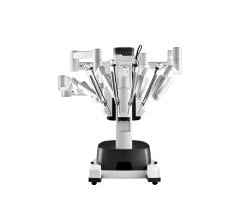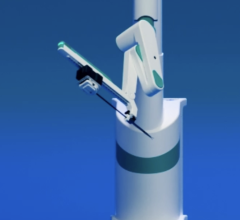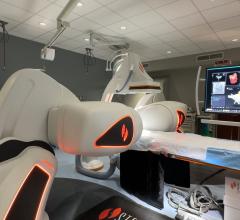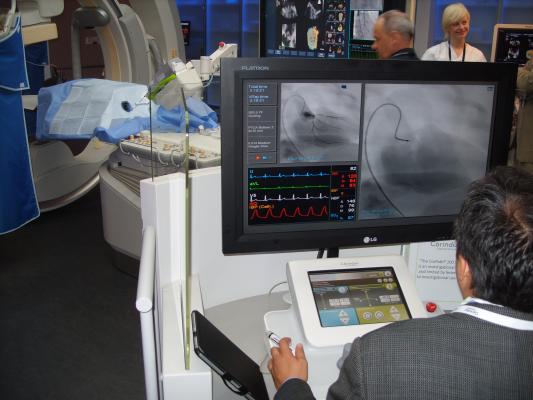
March 29, 2016 — Corindus Vascular Robotics Inc. announced that the U.S. Food and Drug Administration (FDA) has cleared the CorPath System for use in peripheral vascular interventions. This is the third clearance for the CorPath System, including the initial clearance for percutaneous coronary intervention (PCI), which was followed by a clearance for radial PCI in October 2015.
This 510(k) clearance for peripheral intervention was based on results of a clinical trial known as the RAPID (Robotic-assisted Peripheral Intervention for Peripheral Artery Disease) Study conducted at Medical University Graz in Austria.
"For the past two years, I have been successfully treating my coronary patients with robotic precision while protecting my staff and me from the hazards of radiation exposure in the cath lab," said Ehtisham Mahmud, chief of cardiovascular medicine, director of Sulpizio Cardiovascular Center-Medicine, and director of interventional cardiology at University of California San Diego Health System. "The ability to expand robotic precision to treat my peripheral disease patients is an important addition; I am looking forward to continued work with Corindus to optimize robotic therapy for peripheral procedures."
Peripheral vascular procedures can be lengthy and lead to a very high level of radiation exposure for the physicians performing these procedures. The RAPID Study demonstrated that the CorPath System can successfully be used to treat peripheral disease, and previous studies have shown that using the CorPath System will reduce overall radiation exposure for physicians.
The RAPID Study enrolled 20 patients with symptomatic disease with either presence of critical limb ischemia or lifestyle-limiting claudication requiring percutaneous transluminal angioplasty. The CorPath System demonstrated 100 percent device and clinical success in the study.
For more information: www.corindus.com
 January 27, 2026