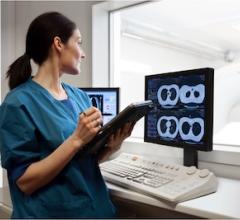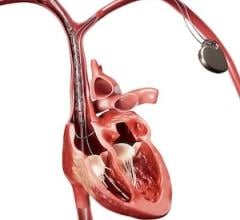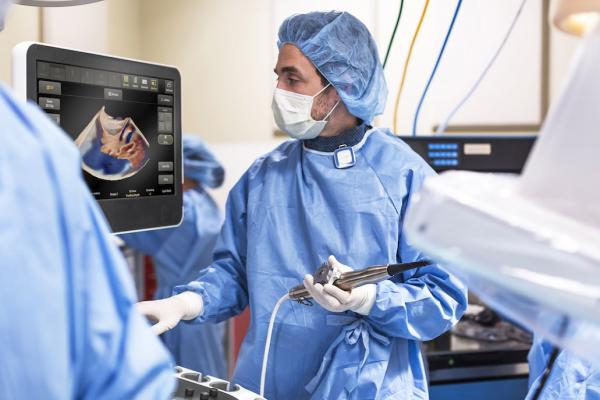
The Epiq CVxi being used for TEE imaging in the cath lab. The system brings together advanced image quality, quantification and intelligence specifically for the cardiologist.
September 15, 2020 — Philips Healthcare recently introduced the latest addition to its portfolio of dedicated cardiovascular ultrasound solutions, the Affiniti CVx. The system aims to support cardiology departments in delivering better care to more patients with increased efficiency and throughput.
With increasing patient volumes due to higher cardiac disease burden, clinicians are being asked to do more in less time and with fewer resources. The new Affiniti CVx enables a tailored workflow for cardiologists by integrating with a common platform that was first introduced with Epiq CVx, the Philips premium cardiology ultrasound system. Affiniti CVx includes a familiar configurable UI, many popular automated tools and the sharing of transducers, now including TEE transducers, across the Affiniti CVx and Epiq CVx systems. Affiniti CVx will also feature AutoStrain technology, which has been shown to reduce strain analysis time by 70%. Together, these features will enable cardiology departments to standardize their ultrasound fleet for easier management, simplify cross-platform clinician training and reduce the total cost of ownership.
At the European Society of Cardiology (ESC) 2020, Philips debuted its new Affiniti CVx and release 7.0 for Epiq CVx cardiovascular ultrasound solutions, which include improvements to enhance confidence in diagnosis and procedures, as well as improve the user experience.
“The COVID-19 pandemic has created an urgent need for nimble, user-friendly cardiac ultrasound solutions that can keep patients and healthcare providers safe while also generating the data needed to make confident decisions. With Release 7.0 of Epiq CVx and Affiniti CVx, we’ve sharpened our focus on improving the cardiology experience by increasing the integration of our platforms to meet this demand,” said Alexandra Gonçalves, M.D., MMSc, Ph.D., cardiologist and medical officer for cardiology and personal health at Philips. “Taken together, these releases help cardiology teams work faster and with greater precision and efficiency so that they can deliver the best possible heart care.”
For more information: www.philips.com/affiniti-cvx
Increasing Cardiac Diagnostic Confidence With the Epiq CVx
Clinicians are needing to diagnose, plan treatments, monitor or follow up with patients more frequently. Philips Epiq CVx provides a suite of features that can significantly reduce the time spent per patient, whether in the echo lab, at the patient bedside, or during procedures.
Release 7.0 for Epiq CVx and Epiq CVxi continues Philips leadership in interventional echocardiography and will provide new ways to better appreciate morphology, to size devices, and reduce the overall procedure time.
Industry-first dedicated tools such as 3-D Auto LAA enable faster measurements of the left atrial appendage (LAA) from 3-D increasing procedure efficiency. Cardiac TrueVue Color and Cardiac TrueVue Glass expand on the current Cardiac TrueVue photo realistic rendering by enhancing the visualization of flow, jet origin and morphology increasing clinician confidence.
Updates to the AutoStrain technology are among many additional new features to improve diagnostic confidence. AutoStrain updates will enhance confidence and efficiency in strain measurements while creating a 70% time saving in the acquisition and processing of images. These capabilities build on automated tools for strain and right heart measurements released in 2019, which have proven especially valuable in monitoring heart health in COVID-19 patients.
For more information: www.philips.com/esc

 August 17, 2026