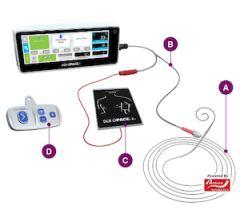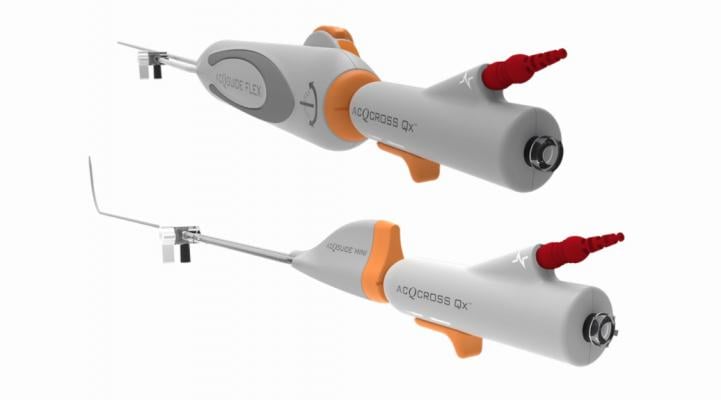
April 14, 2021 — The U.S. Food and Drug Administration (FDA) cleared the Acutus Medical AcQCross family of universal transseptal crossing devices. This is the only transseptal puncture system specifically engineered to pair and mate seamlessly with Acutus’ own suite of sheaths and with sheaths sold by other manufacturers.
In the United States, there are over 300,000 electrophysiology (EP) and structural heart procedures per year involving the use of transeptal crossing devices.[1,2,3] The company will initiate its full U.S. commercial launch of AcQCross in the coming weeks.
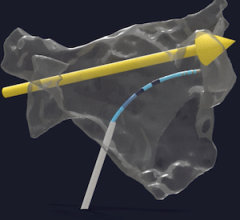
Crossing the septum to gain access to the left atrium of the heart is a critical and required step in any atrial fibrillation or left sided tachycardia ablation procedures as well as in many left sided structural heart procedures (such as left atrial appendage closure device implants or percutaneous mitral valve repair). Achieving the proper crossing angle and location of septal crossing can significantly impact the efficiency of the entire procedure.
The new and expanded family of AcQCross catheters include versions that are length-, diameter- and tip-matched and designed to lock into the hub of sheaths now used in the vast majority of left heart procedures, including those provided by Acutus and by other vendors. This unique compatibility allows physicians to utilize AcQCross with their sheath of choice during virtually any left heart procedure.
AcQCross enables mechanical septal crossing with a spring-loaded needle that can also be enhanced with concurrent delivery of radiofrequency (RF) energy. AcQCross further streamlines procedural workflow by eliminating the need for wire and needle exchanges, as it incorporates a retained 0.032 guidewire within the hollow crossing needle.
“The elimination of guidewire and needle exchanges is an important step in facilitating transseptal crossing procedures,” said Peter Weiss M.D., MSC, director of ventricular arrythmia management and robotics, assistant professor of medicine, Banner University of Arizona Medical Center Phoenix. “The optimal septal crossing location and angle differs depending on the procedure – be it Cryoablation, RF ablation, non-contact mapping or left atrial appendage implant – so the unique ability to easily reposition without cumbersome catheter withdrawals and exchanges are benefits that cannot be overstated. As physicians, we rely on meaningful device innovation that fits into our existing procedural workflow and provides improvement. Acutus is delivering that with AcQCross.”
“This product is absolutely unique in the industry. We are giving physicians an immensely adaptable and versatile product family developed to provide an enhanced and more precise transseptal approach – and still allow them to continue to use their sheath of choice for the remainder of the procedure,” said Vince Burgess, president and CEO of Acutus Medical. “We expect that this product will be quickly and widely adopted by electrophysiologists and interventional cardiologists.”
AcQCross is now commercially available in the United States.
For more information: www.acutusmedical.com/us/
Find more EP lab technology news
References:
1. 2019 Millennium Research Group: Electrophysiology Mapping and Ablation Devices | Market Analysis |US | 2019
2. American College of Cardiology – The NCDR Left Atrial Appendage Occlusion Registry
3. Transcatheter Cardiology Therapeutics (TCTMD), American Heart Association Database
 July 10, 2026