News | Cardiac Imaging | May 12, 2021

Using Contrast MRI After a Heart Attack Could Increase Survival

According to the British Heart Foundation, heart and circulatory diseases cause more than a quarter (27 percent) of all deaths in the UK, which equates to more than 160,000 deaths each year — or one death every three minutes.

May 12, 2021 — According to the British Heart Foundation, heart and circulatory diseases cause more than a quarter (27 percent) of all deaths in the UK, which equates to more than 160,000 deaths each year — or one death every three minutes.

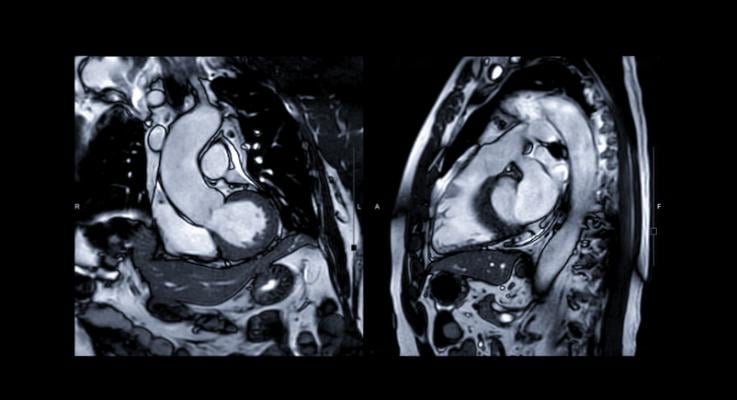
The research, published in the top science journal Advanced Science, found that injection of the trace mineral manganese could enhance MRI scans so that they provided more accurate details of heart function than traditional MRI methods.

These findings, if confirmed in human subjects, could have major implications for the treatment of heart attack patients. The findings could also be of great use in the preclinical evaluation of treatments for patients who suffer from cardiac ischemia — a reduction in blood supply to the heart muscle that could lead to cardiac arrest.

The study also suggests that if manganese-enhanced MRI is performed within the first few hours of a heart attack it could be used to determine the optimal treatment regime for individual patients — helping to regulate changes in the cardiac muscle and thereby further improving survival chances. Findings were evaluated by examining the infarct size and blood supply at three key intervals: one hour, one day and 14 days after a myocardial infarction was induced.

Patrizia Camelliti, M.D., Principal Investigator and Senior Lecturer in Cardiovascular Science at the University of Surrey, said: "Magnetic resonance imaging (MRI) is increasingly used to diagnose and give information on heart conditions. This research using mice allows us to measure the health status of the heart muscle rapidly after a heart attack and could provide important information for optimising treatments in patients."

For more information: http://www.surrey.ac.uk

Related Content

News | Cardiac Imaging

Aug. 12, 2026 — Salus Scientific has launched its Clinical Insights Series, a new publication platform designed to share ...

Home August 17, 2026
Home
News | Cardiac Imaging

Aug. 12, 2026 — Ventripoint Diagnostics is expanding subscription-based access to its VMS+ 4.0, its FDA-cleared platform ...

Home August 14, 2026
Home
News | Cardiac Imaging

August 4, 2026 - Epsilon Imaging and ASCEND Cardiovascular have announced a strategic non-exclusive partnership designed ...

Home August 13, 2026
Home
Feature | Cardiac Imaging | John Memarian

The last few decades have been marked by rapid advances in cardiovascular medicine, particularly in areas like imaging ...

Home August 06, 2026
Home
News | Cardiac Imaging

August 3, 2026 — Despite improvements in technology and awareness, work-related musculoskeletal disorders (WRMSDs) ...

Home August 03, 2026
Home
News | Cardiac Imaging

June 9 2026 — With the project “Triaging artificial intelligence (AI) Tool For Pulmonary Health Using Spectral X-ray ...

Home June 12, 2026
Home
News | Cardiac Imaging

May 21, 2026 — A team of researchers from Carnegie Mellon University, in collaboration with Cleveland Clinic’s ...

Home May 21, 2026
Home
News | Cardiac Imaging

May 1, 2026 — On May 14, Cleerly and interventional cardiologist Neerav Sheth, MD, will present a free webinar on ...

Home May 12, 2026
Home
News | Cardiac Imaging

April 28, 2026 — Abbott has received U.S. Food and Drug Administration (FDA) clearance and CE Mark for its next ...

Home April 29, 2026
Home
News | Cardiac Imaging

April 23, 2026 — Royal Philips has launched the next-generation Bridge Plus Occlusion Balloon, designed to help ...

Home April 23, 2026
Home
Subscribe Now