Image credit: Getty Images
March 9, 2022 – Point-of-care screening for atrial fibrillation (A-fib) using a new generation of handheld electrocardiogram (ECG) devices increased the rate of diagnosis in patients 85 and older, but failed to show similar results in those 65 and older, a study by Massachusetts General Hospital (MGH) has found. Though ineffective for detecting A-fib in all patients, the compact, commercially available devices are feasible for screening the vast majority of patients during primary care physician office visits, the team reported in a paper published in Circulation.
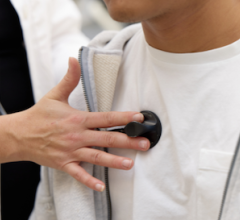
“Considering that advanced age is associated with a substantially increased risk of both A-fib and stroke, point-of-care screening might be an efficient use of single-lead, handheld electrocardiograms for adults 85 and over,” says lead author Steven Lubitz, MD, MPH, a cardiologist, electrophysiologist, and physician investigator with the Cardiovascular Research Center at MGH. “The technology simply requires patients to place their fingers on the device to record an electrocardiogram, and can be easily embedded in the routine clinical practice of primary care physicians.”
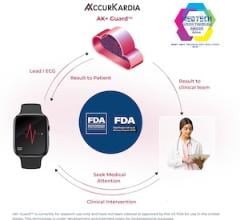
Atrial fibrillation is the irregular and often very rapid heart rhythm that can lead to blood clots and stroke. Because A-fib may be asymptomatic and not diagnosed until the time of stroke, screening with an ECG to measure heart rate and detect abnormal cardiac activity is an attractive early detection strategy. Standard ECGs used in outpatient practices, however, are bulky equipment requiring 10-15 minutes to record the electrocardiogram. Mobile consumer technology, on the other hand, has produced compact, single-lead ECG devices that can be held in the patient’s hand, or worn as watches, for measuring heart rate and detecting potential A-fib disturbances anytime, anywhere, while sharing that information with the clinician. This technology is gradually being integrated into clinical practices, driven by the rapid growth of telemedicine to remotely assess patients.
MGH researchers set out to determine if routine screening of older adults with a handheld electrocardiogram for 30 seconds is more effective for diagnosing A-fib than “usual care” in a primary care practice office. The study involved over 35,000 individuals from 16 primary care sites affiliated with the MGH practice-based research network, directed by Steven Atlas, MD, MPH. Half the sites were randomly selected to include the screening intervention, where medical assistants used handheld ECGs at the start of the visit while checking routine vital signs. The one-year study succeeded in screening 91 percent of eligible patients, demonstrating that single-lead rhythm assessment is feasible as part of routine primary care practice. This supports other studies suggesting that handheld devices can enable rapid and scalable mass screening.
While the MGH study did not find a significant increase in newly detected A-fib in all patients 65 years and older, for those 85 and older there was a nearly two percent increase in new A-fib detections in the screening group compared to “usual care” provided to patients in the control group. The study also found an increased likelihood of diagnosis during the patient’s primary care encounter, versus diagnosis at other sites such as emergency department or inpatient settings that may be more costly and resource intensive. Moreover, the study reported point-of-care screening was associated with high rates of oral anticoagulation prescriptions written for patients with newly diagnosed A-fib, a finding Lubitz found “very reassuring.”
He added, “Our work affirmed that single-lead devices generate information for the physician that is actionable, though the proportion of newly detected A-fib cases using a point-of-care ECG screening approach is likely to be very small. For that reason, we think handheld devices are best deployed for people at the highest risk of A-fib and stroke, and age is an excellent surrogate for that determination.”
Lubitz is associate professor of Medicine at Harvard Medical School (HMS). Senior author Daniel Singer, MD, is professor of Medicine, HMS. Co-authors include Steven Atlas, MD, MPH, associate professor of Medicine, HMS, David McManus, MD, chair of the Department of Medicine at University of Massachusetts Chan Medical School, and Jeffrey Ashburner, PhD, MPH, assistant professor of Medicine, HMS.
The study was funded by the Bristol Myers Squibb-Pfizer Alliance.
For more information: www.massgeneral.org/
Related content:
Remapping Atrial Fibrillation Treatment

 June 16, 2026