April 6, 2022 – Final results from the BIO|GUARD-MI study show a 31 percent reduction of MACE in a sub-group analysis of patients with non-ST segment elevation myocardial infarction (NSTEMI). In the primary endpoint analysis of the total patient population, a trend towards MACE reduction in the ICM group was observed but did not reach statistical significance. The outcomes were presented by coordinating investigator Dr. Christian Jøns, Rigshospitalet Copenhagen, at a Late-Breaking Clinical Trial session at the American College of Cardiology’s 71st Annual Scientific Session in Washington D.C. on April 4th.
The study was led by Dr. Christian Jøns, Prof. Peter Søgaard, and Prof. Poul Erik Bloch Thomsen, Aalborg University Hospital, and Prof. Steffen Behrens, Vivantes Humboldt-Klinikum, Berlin, and sponsored by BIOTRONIK. The randomized, controlled, prospective, multi-center, international study enrolled 802 patients in 60 sites across Europe, Australia and the US between August 2015 and April 2020. The primary composite study endpoint was time to first MACE. The study included post-myocardial infarction patients with high risk defined by CHA2DS2-VASc score ≥4 (men) or ≥5 (women).
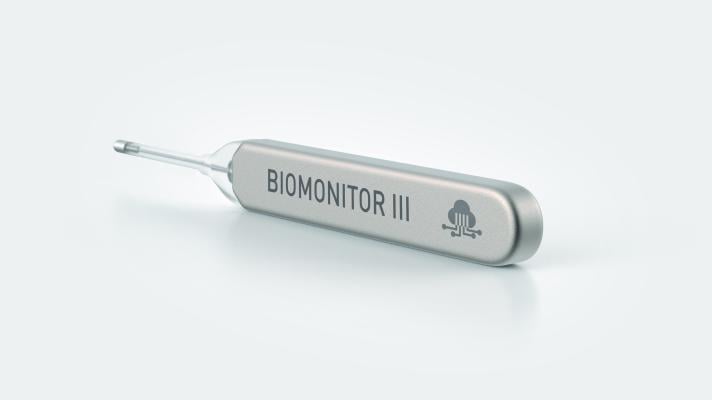
"Myocardial infarction is a leading cause of death globally and patients are at increased risk of major adverse events post-MI," commented Dr. Christian Jøns, Rigshospitalet Copenhagen, Denmark. "We knew that arrhythmias are a strong predictor for adverse outcomes but they often remain unnoticed by conventional follow-ups. BIO|GUARD-MI is the first study which has investigated whether monitoring and responding to arrythmias with ICMs via Home Monitoring can improve clinical outcome in post-MI patients – and we used procedures in a real-world-setting that can be applied everywhere."
In addition to showing a reduction of MACE in NSTEMI patients, the continuous monitoring identified a large arrhythmia burden (at 2 years, 67.3% of the ICM group had a first arrhythmia detected) and showed that patients in the ICM group received guideline-recommended treatment, in response to arrhythmia detection, more often than the control group (39.4% vs. 6.7%).
"The lack of a benefit in STEMI patients surprised us all, but we found that they have a lower risk to suffer a subsequent major adverse cardiac event. And it appears to be the higher risk that makes arrhythmia monitoring effective in NSTEMI patients," said Prof. Peter Søgaard, Aalborg University hospital, Denmark. "Keeping a close eye on the patients remotely could turn out to be very useful because the patients with the highest risk have the highest benefit."
"After their hospital discharge, myocardial infarction patients are usually seen for follow-up by their GP or cardiologist at extended intervals, despite their high cardiovascular risk. We have developed the technology to identify when they need attention, not only when the calendar says so. We will explore with clinicians and the scientific community how we can use our ICM and Home Monitoring capabilities to improve care and outcomes of post-myocardial infarction patients and how this may be translated to clinical practice and guidelines," added Dr. Klaus Contzen, Vice President Clinical Affairs, Center for Clinical Research, BIOTRONIK.
For more information: www.biotronik.com

 April 02, 2026