May 20, 2022 — Results from early clinical evaluation of the Alleviant System to treat heart failure patients with preserved and reduced ejection fraction (HFpEF and HFrEF) was presented as late-breaking clinical research at the Society for Cardiovascular Angiography & Interventions (SCAI) 2022 Scientific Sessions. This multi-center evaluation across three trial programs (ALLEVIATE-HF-1, HF-2 and HFrEF) demonstrated procedural safety and feasibility with a promising efficacy signal through six months.
Impacting more than 26 million people worldwide, heart failure occurs when the heart muscle is unable to pump effectively enough to meet the body’s need for blood and oxygen (NLM). Currently guidelines recommend medical therapy for heart failure patients with HFpEF and HFrEF, however some remain symptomatic despite optimal medical therapy. The Alleviant System is a transcatheter technology intended to reduce pressure within the left atrium through the creation of a therapeutic interatrial shunt without a permanent cardiac implant or open-heart surgery.
Patients aged ≥ 40 years, New York Heart Association (NYHA) class II, III or ambulatory IV with elevated peak exercise PCWP were included in the study. Baseline screening included echocardiography, exercise right heart catheterization, KCCQ and 6MWT. Following a transseptal puncture, the Alleviant device was inserted through the femoral vein (located near the groin), advanced to the heart and supplied with a short pulse of radiofrequency energy in order to remove a segment of the interatrial septum – a thin wall of tissue that separates the right and left atria of the heart. Procedures were performed under fluoroscopic and echocardiographic guidance.
To date, 31 patients have been followed through three months and 15 patients through six months. Mean peak exercise PCWP decreased from baseline to one month across all studies. A significant increase in KCCQ overall summary score was observed at six months in the HF-1 study and at three months in the HF-2 and HFrEF studies. Echocardiography confirmed all shunts evaulated remained patent at one, three and six months; 10 patients have additionally completed one-year follow-up with confirmed shunt patency. The investigators and research team will continue to evaluate the Alleviant System as they collect ongoing follow-up data.
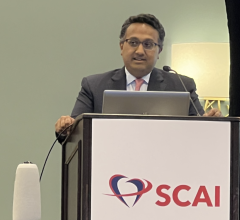
“Unfortunately, we know that this group of heart failure patients currently has limited treatment options,” said Colin M. Barker, M.D., FSCAI, Director of the Cardiac Cath Lab, Vanderbilt University Medical Center in Nashville, Tenn. and lead author of the study. “This early data is promising and shows that we are headed down the right path in developing a new safe and effective approach, without the burden of an implant, to help address the unique needs of this large and underserved patient population.”
Alleviant Medical is preparing to sponsor a large multi-national prospective, randomized, shamcontrolled trial on its no-implant interatrial shunt device in the treatment of HFpEF patients. Outcomes from the recently-published REDUCE LAP-HF II pivotal study underscore the importance of appropriate patient selection and have informed the design of the company’s forthcoming pivotal study. Recruitment is anticipated to begin later this year.
“Alleviant is dedicated to partnering with clinicians globally in the continued development of robust clinical evidence with an implant-free atrial shunt procedure for patients suffering from heart failure,” said Adam L. Berman, CEO of Alleviant Medical.
For more information: www.scai.org

 April 24, 2026