Getty Images
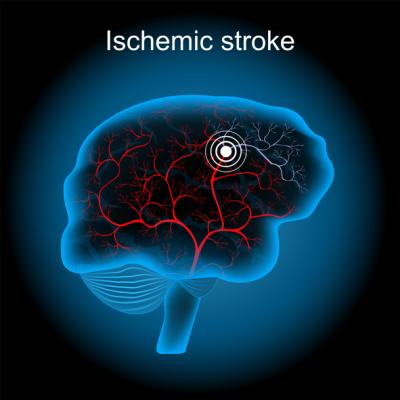
February 14, 2023 — VST-Bio Corp. a leader in the development of innovative biologics to treat acute and chronic cardiovascular disease, presented data from a recent large animal study performed by VST-Bio and Yale University demonstrating that a single iv bolus of VST-002 led to meaningful reduction in brain damage and improved function in an advanced model of ischemic stroke.
Dr. Federico Corti, from the Cardiovascular Research Center of Yale University, presented data which showed that a single bolus of humanized anti-Syndecan 2 antibody (VST-002), led to 60% reduction of stroke damage as visualized by magnetic resonance imaging, with all measures being statistically significant over control animals. Furthermore, the treatment was safe with no observed toxicities. The study was performed by an independent CRO, blinded to treatment assignment.
VST-Bio Chief Executive Officer Eric Duckers, MD PhD, said, "The VST-002 human antibody therapy is being initially developed to treat ischemic stroke patients (Cerebrovascular Accident – CVA) who present late at the medical centers, when conventional therapy is no longer effective. The current standard-of-care is thrombolytic therapy to resolve blood clots, but unfortunately is only effective when given within the first few hours of stroke, leaving 90% of all patients ineligible or non-responsive to conventional treatment. VST-002 may offer an alternative path to preserve brain function and improve recovery after ischemic stroke".
"In light of these positive data on our humanized antibody therapy, we expect to meet our internal timeline to complete our submission to the FDA for our first indication for Late-Stroke, and to initiate clinical trials in 2024."
Prof. Dr. Michael Simons of Yale University, chair of the Scientific Advisory Committee, commented: "The humanized anti-Syndecan 2 monoclonal antibody therapy has shown consistent efficacy in normalizing vascular patency in various preclinical assays and models 1,2. A normalization of vascular permeability in acute stroke results in reduced local and systemic inflammation as well as decreased edema formation. As a result, there is a significant reduction of stroke size, even when VST-002 antibody therapy is initiated late after the onset of stroke. Reducing edema, inflammation, and secondary injury after stroke could have a meaningful benefit for stroke patient outcomes."
For more information: www.vst-bio.com
References:
- F Corti, E Ristori, F Rivera-Molina, D Toomre, J Zhang, J Mihailovic, ZW Zhuang, M Simons, "Syndecan-2 selectively regulates VEGF-induced vascular permeability.", Nat Cardiovasc Res. 2022 May; 1(5): pg 518-528
- F Corti F and M Simons. "Modulation of VEGF receptor 2 signaling by protein phosphatases.", Pharmacol Res. 2017 Jan; 115: pg 107-123.
 October 19, 2026