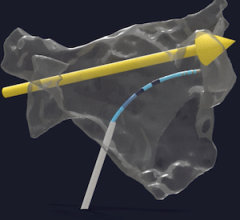
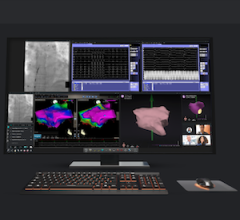
Cardiology Consultants of Philadelphia recently opened the Ambulatory Cardiovascular Center of Pennsylvania, an $8.6 million ASC, located in Wayne, Pennsylvania. (All photos: Ambulatory Cardiovascular Center of Pennsylvania/Jaci Downs Photography)
The shift toward steering appropriate cardiovascular cases to outpatient settings is gaining momentum, driven by a series of new rules from the Centers for Medicare & Medicaid Services (CMS). Earlier this year, CMS added 560 codes to the Ambulatory Surgical Center (ASC) procedure list, including electrophysiology studies and ablations.1 For 2027, CMS proposes adding 618 more codes.2
States like Texas, Arizona and Florida, where a Certificate of Need (CON) is not required before opening an ASC, are already experiencing surges in new outpatient cardiology facilities. Other states may not be far behind.
“Whether a state is CON or not, the momentum toward outpatient services in cardiovascular care is unlikely to reverse,” says Nick Zaunbrecher, chief strategy officer at Cardiovascular Logistics, a national, physician-led platform that partners with leading cardiology practices. “It’s not if, but when the regulatory changes are going to take place in each state.”
Building the Infrastructure
Cardiology groups looking to add outpatient services, from ASCs to office-based labs, must first understand the regulatory requirements in their state, explains Kristen Richards, vice president of ambulatory care for Cardiovascular Logistics. Then they must examine their finances and volumes to know whether moving forward is prudent.
“It’s not the ‘if you build it, they will come’ strategy,” Richards says. “It’s having a strategy around strong financial performance that has physician volumes. You need to understand the payer mix in your community. You need to understand the expenses required to build the infrastructure.”
Ambulatory surgical centers represent a significant capital investment. Zaunbrecher estimates that building costs run between $8 million and $13 million. “That’s not even including the capital you’re putting into the ASC to operate it,” he says.
From a payer standpoint, cardiology groups should work with managed-care partners to ensure that the procedures brought into the ASC environment will provide enough reimbursement to cover overhead, staff, and technology costs. Cardiologists should also evaluate their case mix and consider adding higher-reimbursement interventions and electrophysiology procedures.
“The practices that succeed are those that built the operational infrastructure to support the sustainable growth that’s associated with the ASC,” Zaunbrecher says.

Selecting the Right Cardiology Patients
CT-first strategies for diagnosing coronary artery disease, including CT-derived fractional flow reserve (FFR-CT) and AI-enabled plaque analysis, provide an ideal complement to ASC strategies.
“They could be your first line of defense to see if patients need a cardiac catheterization, because a cath procedure is invasive, whereas [FFR-CT and plaque analysis] are noninvasive,” Richards says. “If we’re truly about providing care for our patients in the right setting, we need to make sure that we’re utilizing those tools that are out there that allow us to do that and appropriately place our patients.”
Patients with chronic conditions such as heart failure and those at high risk for cardiovascular disease may benefit from other outpatient services, including remote patient monitoring and chronic-care management, Zaunbrecher says.
“The key lesson here is that technology alone doesn’t create value,” he says. “It’s the interaction between the patient and the nurse. That value comes from the integration of the monitoring of the data that’s reported and dropped into a workflow where all of our nurses can act on it quickly while treating patients at home.”
Room for Everyone
While some see outpatient settings like ASCs as a competitive threat to hospitals, Zaunbrecher envisions a future where the two coexist in accommodating rising volumes of cardiovascular patients amid a projected shortage of cardiologists.
“The future of cardiology is not about moving care out of a hospital necessarily,” he says. “It’s about delivering the right care at the right time in the right place. If we understand that, then all healthcare providers—hospitals and practices alike—are going to be very successful.”
References
-
Dyrda L. CMS adds 560 codes to ASC payable list, bumps pay 2.6%: 5 notes. Becker’s ASC Review. Published Nov. 24, 2025. Accessed Sept. 9. beckersasc.com/asc-coding-billing-and-collections/cms-adds-271-codes-to-asc-payable-list-bumps-pay-2-6-5-notes
-
Centers for Medicare & Medicaid Services. Medicare program: hospital outpatient prospective payment and ambulatory surgical center payment systems and quality reporting programs; proposed rule. Fed Regist. 2026;91(129):41734-42032. Published July 7. Accessed Sept. 9. federalregister.gov/documents/2026/07/07/2026-13656/medicare-program-hospital-outpatient-prospective-payment-and-ambulatory-surgical-center-payment

 August 28, 2026