Sept. 8, 2025 — Pulse Biosciences, Inc., a company leveraging its novel and proprietary Nanosecond Pulsed Field Ablation (nanosecond PFA or nsPFA) technology, has announced that the U.S. Food and Drug Administration (FDA) has granted approval for the company’s Investigational Device Exemption (IDE), allowing Pulse Biosciences to proceed with the initiation of its nsPFA Cardiac Surgery System Study, NANOCLAMP AF, for the treatment of atrial fibrillation (AF).
 This single-arm, prospective study is designed to demonstrate primary effectiveness of the nsPFA Cardiac Surgical System for the treatment of AF in concomitant surgical procedures. Up to twenty sites, including two outside the United States, are planned to enroll up to 136 patients. Additional details of the study will be made available on clinicaltrials.gov.
"We believe nsPFA’s novel and proprietary nonthermal mechanism of cardiac ablation offers significant safety, effectiveness and speed improvements over current thermal modalities, such as radiofrequency ablation. The first-in-human feasibility data we are generating in Europe gives us confidence in our ability to successfully execute the IDE study, and we look forward to enrolling our first patients,” said Dr. Niv Ad, Chief Science Officer, Cardiac Surgery at Pulse Biosciences.
"This FDA IDE approval is a major milestone for Pulse Biosciences. The study approval is a testament to the quality of the preclinical and human clinical data that has been generated in support of this breakthrough technology. Pulse Biosciences is the first company to advance PFA into the cardiac surgical field for the treatment of AF,” said Paul LaViolette Co-Chairman and CEO of Pulse Biosciences.
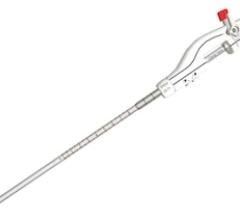
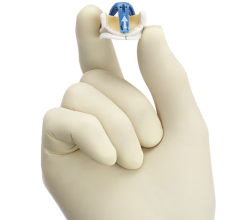
The nsPFA Cardiac Clamp is designed to deliver continuous, linear, transmural ablations during concomitant cardiac surgeries. The bipolar device leverages the Company’s proprietary nonthermal nsPFA technology, which early clinical data suggest may offer safety and performance advantages over traditional thermal ablation methods. Unlike thermal approaches, nsPFA energy minimizes the risk of collateral tissue damage due to its nonthermal mechanism of action. The nsPFA Cardiac Surgical System received FDA Breakthrough Device Designation in July 2024 and is enrolled in the FDA’s Total Product Life Cycle (TPLC) Advisory Program (TAP).
“The nsPFA Cardiac Clamp is designed to be an optimal replacement for conventional radiofrequency ablation devices, offering a faster, more consistent, and safer approach to surgical cardiac ablation. The ability to achieve full thickness, contiguous, durable lesions with reduced ablation times highlights the unique clinical value of the nsPFA technology,” said Dr. Gan Dunnington, Chief Medical Officer, Cardiac Surgery at Pulse Biosciences. “We believe the benefits of nsPFA technology for cardiac ablation will increase the overall adoption of surgical cardiac ablation for AF well beyond what radiofrequency ablation has been able to do.”
The Company’s first-in-human feasibility study has been underway in the EU since August 2024, with over 40 patients treated across three sites in The Netherlands. Surgeons have reported rapid ablation times—as short as 2.5 seconds—along with consistent, contiguous, and fully transmural lesions. The Company expects to add additional sites to this study throughout 2025. The accelerating clinical rollout is building a strong foundation of real-world evidence to support broader global adoption of nsPFA. Pulse Biosciences is looking forward to presentations highlighting its nsPFA Cardiac Clamp at the upcoming annual European Association for Cardio-Thoracic Surgery meeting October 8-11, 2025 in Copenhagen, Denmark.
More information is available at www.pulsebiosciences.com.

 May 05, 2026