Image: Polarean
Jan. 20, 2026 — Polarean, a commercial-stage medical imaging company advancing functional MRI of the lungs, has expanded its Xenon MRI platform into cardiopulmonary pharma-sponsored drug development through a multi-center U.S. study in PH-ILD.
Funded by a leading cardiopulmonary pharmaceutical company, the researcher-led study will use Xenon MRI–derived biomarkers to evaluate an inhaled therapy designed to address both pulmonary vascular dysfunction and interstitial lung disease. Polarean is working in collaboration with VIDA Diagnostics (VIDA), providing centralized imaging operations, site orchestration and advanced Xenon MRI biomarker analysis.
Expanding Xenon MRI
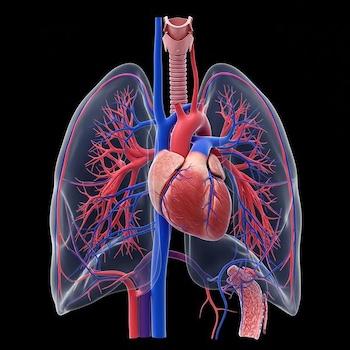
Xenon MRI specifically probes the smallest part of the heart–lung vascular circuit, the pulmonary capillaries. Until now, this represented a “silent zone” of lung function that could not be measured directly with existing tools such as right-heart catheterization or V/Q (ventilation–perfusion) scans, which rely on indirect inference of capillary pressures, flow, blood volume and oxygen transfer efficiency.
Xenon is gas that follows the same path as oxygen gas and can enter micron-level spaces to assess treatment-induced physiological changes across the lung parenchyma and capillary bed where oxygen is delivered to the blood. Xenon MRI enables noninvasive, radiation-free quantitative images that have the potential to support:
- Early pharmacodynamic readouts in clinical studies
- Differentiation between inhaled and systemic therapies based on mechanism of action
- Improved patient characterization as predominantly left-heart disease (post-capillary) or right-heart disease (pre-capillary)
- Greater endpoint sensitivity in cardiopulmonary clinical trials
Innovative Trial Design
The study is designed to capture both acute (within minutes) and chronic (over 12 weeks) treatment effects using Xenon MRI to quantify regional changes in lung ventilation, gas diffusion across the interstitial membrane, pulmonary capillary blood volume, and microvascular hemodynamics.
By pairing an inhaled therapy with an inhaled imaging signaling agent, these measurements provide direct insight into cardiopulmonary physiology at the site where the drug is delivered. Imaging the smallest and most critical functional units of oxygen transfer to the blood, the alveoli and surrounding pulmonary capillaries, enables direct assessment of a region that has historically remained a “silent zone” and is not visible with conventional imaging, pulmonary function testing, or hemodynamic measurements alone.
“There are encouraging recent data on prostacyclin analogues in fibrotic lung disease, both in patients with and without pulmonary hypertension. It will be interesting to see whether Xenon MRI gas-exchange imaging can help elucidate if early antifibrotic changes in interstitial membrane function can be visualized and quantified noninvasively," said Arun Jose, MD, MS, an investigator in the study from the University of Cincinnati.
“This study builds on our prior work using Xenon MRI to evaluate early treatment effects in pulmonary hypertension. Assessing regional lung pharmacodynamics within minutes of inhalation may help clarify how inhaled therapies exert local pulmonary effects distinct from systemic mechanisms,” said Sudar Rajagopal, MD, PhD, a cardiologist investigator in the trial from Duke University.
“This collaboration heralds the expanding role of Xenon MRI as a cardiopulmonary imaging platform for drug development. By providing novel, noninvasive biomarkers of pulmonary vascular and interstitial disease in a single 10-second breath hold, Xenon MRI can help accelerate clinical development. This can result in savings of both time and cost, allow industry partners to visualize the microvascular effects of their treatments, and de-risk therapeutic programs in areas of significant unmet need,” said Alex Dusek, Chief Business Officer of Polarean.
An Unmet Need in PH-ILD
PH-ILD is a severe, progressive condition characterized by pulmonary vascular remodeling in the setting of interstitial lung disease. Patients experience marked exercise limitation, worsening dyspnea, and significantly reduced survival. In the United States, PH-ILD affects tens of thousands of patients, and prevalence increases substantially as ILD progresses, underscoring both a meaningful disease burden and a critical need for better tools to detect and monitor pulmonary vascular involvement earlier in the disease course.
Importantly, PH-ILD reflects inefficient capillary oxygenation driven by both parenchymal disease, where interstitial membrane thickening impairs gas diffusion, and pulmonary microvascular dysfunction, where blood flow is restricted. This dual pathology makes PH-ILD particularly challenging to study, diagnose, and treat, and contributes to poor outcomes when pulmonary hypertension develops.
Conventional tools provide fragmented views of this biology. Standard CT imaging characterizes structure but cannot visualize the function happening in the smallest units of the pulmonary capillaries. Right-heart catheterization is an invasive measure inserted through an intravenous catheter into the heart and the pulmonary artery trunk to measure pressures in the cardiovascular circuit but does not assess regional gas exchange at the alveolar level. Lastly, Pulmonary function tests lack cardiovascular insight, spatial resolution, and sensitivity needed to detect early or localized disease.
Together, these limitations highlight the need for imaging tools capable of directly assessing regional pulmonary gas exchange and microvascular function, positioning Xenon MRI as a differentiated platform to support patient characterization, therapeutic development, and more sensitive clinical trial design in PH-ILD.

 August 17, 2026