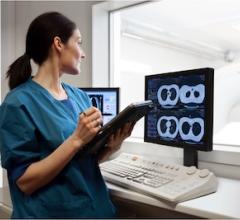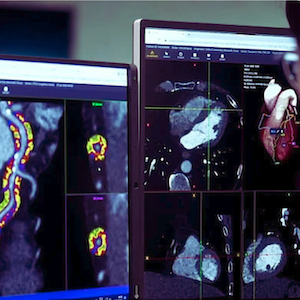
Photo: Caristo Diagnostics
Aug. 31, 2026 — Caristo Diagnostics has announced new independent University of Oxford-led research showing that Caristo's FAI-Score biomarker can unlock coronary inflammation assessment in non-contrast cardiac CT, identifying high risk even in patients with a zero coronary calcium score.1 The research was presented at the European Society of Cardiology (ESC) Congress 2026.
The findings build on the same coronary inflammation biology and AI technology underpinning the CaRi-Heart technology, Caristo's FDA-authorized and first and only commercially available product for coronary inflammation assessment from routine coronary CT angiography.
The data were presented alongside late-breaking ORFAN-MAESTRIA research using Caristo's AI to predict stroke from a routine cardiac CT,2 and several other sessions demonstrating the scale of Caristo's platform to support broader cardiovascular risk assessment.
This latest data reinforces the evidence that coronary inflammation can provide additional risk information from scans already used in routine cardiovascular care.
Emerging Cardiac Applications
FAI-Score was the focus of separate ORFAN (Oxford Risk Factors And Non-invasive Imaging) study analyses:
- A first for non-contrast CT: FAI-Score unlocked coronary inflammation assessment from a non-contrast CT — a scan used in calcium scoring that takes less time, doesn't require dye, and is typically less expensive than contrast CT. Even in patients with a zero-calcium score, those with elevated FAI-Score had a significantly higher risk of cardiovascular mortality.
- Detecting risk beyond traditional factors: A separate analysis found that coronary inflammation, measured by FAI-Score, predicted cardiovascular death even in patients with none of the standard modifiable risk factors (SMuRFs) — diabetes, hypertension, high cholesterol, smoking and obesity.3 The predictive value was strongest in this group, underscoring the potential limitations of traditional risk-factor-based assessment alone.
"Nearly 50% of first-time heart attacks occur in people classified as 'low-risk' by traditional cardiovascular risk assessments, underscoring the need for new ways to identify vulnerable patients earlier," said Steve Deitsch, CEO, Caristo Diagnostics. "With CaRi-Heart now FDA-authorized and in clinical use in the U.S., the research presented at ESC Congress 2026 shows how much further our technology could go, from detecting coronary inflammation on a routine non-contrast scan (currently in development) to catching the earliest signs of stroke."
Predicting Stroke Independent of Atrial Fibrillation
In a decade-long ORFAN-MAESTRIA study of more than 81,000 patients, researchers found that Caristo's AI technology identified signs of left atrial myopathy on routine cardiac CT that predicted future stroke risk. Patients identified as high-risk had a 17-fold higher likelihood of cardioembolic stroke than those identified as low-risk, outperforming today's standard clinical risk tool. Importantly, the algorithm flagged this risk independently of atrial fibrillation, meaning it can catch danger in patients who show no warning signs on a standard heart rhythm test.
"Today, FAI-Score is helping us identify coronary inflammation and better predict cardiovascular risk," said Professor Charalambos Antoniades, British Heart Foundation Chair of Cardiovascular Medicine at the University of Oxford and principal investigator of the ORFAN-MAESTRIA study. "Looking ahead, the same scientific approach could be applied to other disease pathways, including left atrial myopathy, to help predict future cardioembolic stroke. By applying the same biological framework to different pieces of the cardiovascular puzzle, we can help clinicians detect high-risk patients sooner and intervene earlier."
AI 'Virtual Biopsy'
In a separate investigator-led ORFAN analysis, researchers developed an AI signature designed to create a "virtual biopsy" of cytokine-driven inflammation in the artery wall across more than 80,000 patients in the UK and US. The signature predicted long-term cardiac mortality in the cohorts, along with an elevated risk of heart failure and kidney disease among patients with the highest inflammation signal. The findings support the value of assessing biological inflammation with routine CT imaging and may inform patient selection for anti-inflammatory therapies.4 This analysis remains investigational and is not currently available as a commercial Caristo product.
"Research like this shows the value of investing in science that can move from discovery towards practical tools for patient care. By finding new ways to identify people at higher risk before a heart attack or stroke occurs, studies like this have the potential to help clinicians intervene earlier to prevent these devastating acute events and improve outcomes for patients. The British Heart Foundation is proud to support translational research that brings academic discoveries closer to the people who need them most," said Prof. James Leiper, Director of Research at the British Heart Foundation.
References:
- "Coronary Inflammation Quantified on Contrast and Non-Contrast Cardiac CT Identifies High-Risk Individuals Independently from Coronary Calcification: Implications for Those with Zero Calcium Score," presented by Prof. Kenneth Chan at the European Society of Cardiology (ESC) Congress 2026.
- "Using AI to Detect Atrial Myopathy and Predict Cardioembolic Stroke from Routine Cardiac CT: The ORFAN-MAESTRIA Study," presented by Prof. Charalambos Antoniades during the Late-Breaking Clinical Science session at the European Society of Cardiology (ESC) Congress 2026.
- "Coronary Inflammation Predicts Cardiovascular Risk in the Absence of Standard Modifiable Risk Factors (SMuRFs): The ORFAN Study," presented by Prof. Leanne Eveson at the European Society of Cardiology (ESC) Congress 2026.
- "'Virtual Biopsy' of Arterial Cytokine Activation Predicts Long-Term Cardiac Mortality in Over 80,000 Patients from UK and USA," presented by Prof. Christos Kotanidis at the European Society of Cardiology (ESC) Congress 2026.


 October 08, 2026