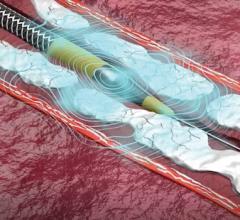
Oct. 21, 2026 — The U.S. Food and Drug Administration (FDA) has cleared Elucid's FFR-IQ software for non-invasive estimation of fractional flow reserve from coronary CT angiography (FFR-CT). FFR-IQ introduces BioIntegrated FFR-CT, which incorporates coronary anatomy and plaque composition into the estimation of coronary physiology to support more accurate individualized assessment and more precise treatment decisions.
Invasive FFR, the ground truth for FFR-IQ, indicates whether a narrowing in a coronary artery is limiting blood flow to the heart muscle and has traditionally been measured with an invasive pressure wire during cardiac catheterization as the gold standard to determine whether revascularization, such as coronary artery stent or bypass, is needed. By estimating FFR noninvasively, FFR-IQ can help physicians identify which patients are likely to benefit from invasive evaluation and treatment, potentially helping avoid the majority of unnecessary catheterizations while identifying flow-limiting disease requiring revascularization that anatomy alone may miss.
The ELUCIDATE FFR-CT study, which supported Elucid’s recent US FDA 510(k) clearance of FFR-IQ, demonstrated an overall sensitivity of 92.2% and specificity of 93.1%, the highest of any FFR-CT validation study.1
FDA Cleared Plaque Platform
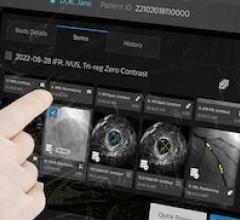
Elucid is bringing FFR-IQ and Plaque-I together in a comprehensive clinical platform that integrates coronary anatomy, physiology and plaque biology from a single CCTA, supported by a new interface and reporting workflow. Plaque-IQ, the only FDA-cleared CT plaque platform trained and validated on histology, evaluates stenosis, plaque burden and composition, including lipid-rich necrotic core (LRNC), with high correlation to NIRS-IVUS for identifying lipid-rich plaques and anatomical features. These plaque measurements inform FFR-IQ, reflecting how plaque type and volume influence vasodilatory capacity and coronary flow even in lesions with similar stenosis. This integration supports lesion-specific assessment and personalized medical and interventional decisions.
“Plaque composition, coronary anatomy, and physiology are closely connected,” said Amir Ahmadi, MD, FACC, FSCCT, Clinical Associate Professor of Medicine (Cardiology) at the Icahn School of Medicine at Mount Sinai and Elucid’s lead scientific advisor. “BioIntegrated FFR-CT incorporates anatomy and plaque characteristics into the physiological estimate itself. Together with plaque assessment, this approach can help physicians evaluate the significance of an individual lesion while also addressing the patient’s broader atherosclerotic disease and need for preventive treatment.”
“Physicians have told us they want a more accurate FFR-CT, and we’re thrilled to deliver on that need with the most accurate,” said Kelly Huang, PhD, CEO of Elucid. “Elucid’s mission is predicting and personalizing the prevention of heart attacks and strokes, and our high-performing FFR-IQ, alongside Plaque-IQ, is intended to be a step change for current patient care and a step forward to the future of personalized medicine in cardiology.”
Results of the ELUCIDATE FFR-CT study, which detail the diagnostic performance of Elucid’s BioIntegrated FFR-IQ product, will be presented at the annual Transcatheter Cardiovascular Therapeutics (TCT) conference in San Diego on Sunday, November 1. Additionally, the company has planned two hands-on sessions within the TCT Physiology Training Pavilions on November 1 and will feature FFR-IQ and Plaque-IQ at booth #3424 in the exhibit hall.
Reference
1. Elucid FFR-IQ (B.1). FDA 510(k) Summary, K262015. Sept. 29, 2026. www.accessdata.fda.gov/cdrh_docs/pdf26/K262015.pdf. Highest reported performance of FDA cleared FFR-CT validation studies


 August 28, 2026