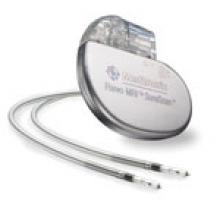
Estimates say up to 75 percent of patients with a pacemaker will need magnetic resonance imaging (MRI) over the course of their lifetime.[1]  Yet as the industry has long been aware, MRIs can cause a number of adverse reactions when conducted on patients with a pacemaker. Aside from either the loss of pacing or inappropriate pacing, the MRI can cause current and heat to travel down to the heart muscle, resulting in local damage or life-threatening arrhythmias.


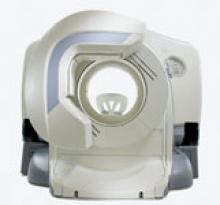
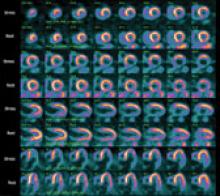
There are currently three major trends in cardiac nuclear perfusion imaging technology: advances in detector hardware, improved software and new radiotracers. These advances have enhanced the diagnostic performance of both single photon emission computed tomography (SPECT) and positron emission tomography (PET) perfusion imaging.


November 22, 2011 — The controversial subject of “indiscriminate” stenting to treat asymptomatic carotid stenosis (ACS) was addressed at the 38th annual VEITH Symposium.


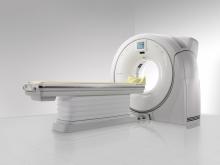
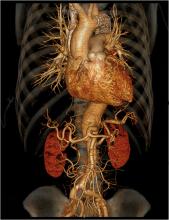
Computed tomography (CT) scanner manufacturers say they are tracking numerous trends in the cardiac imaging market that are influencing their development efforts. Among them are concerns over ionizing radiation dose, increasing use of CT to evaluate chest pain patients, development of CT perfusion imaging and the need to simplify cardiac imaging and workflow.


November 21, 2011 — Boston Scientific has reached an exclusive agreement with Catheter Robotics Inc. (CRI) to market the CRI Amigo system, a remote-controlled catheter system and related accessories. The two companies will focus their efforts in select European countries.

November 21, 2011 — Stereotaxis Inc. announced the launch of Odyssey Cinema Studio, a clinical procedure online broadcast platform. The system provides a turn-key solution for hospitals to facilitate high definition remote physician collaboration and global medical education.

Subscribe Now