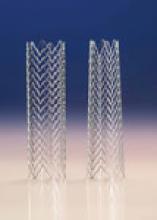
May 20, 2011 - Boston Scientific Corporation today announced 12-month results from its PLATINUM Small Vessel study, demonstrating excellent safety and effectiveness outcomes for the 2.25mm Promus Element Everolimus-Eluting Platinum Chromium Stent System in treating small vessel coronary disease. The study is a global, prospective, single-arm, subtrial of the PLATINUM clinical program. It compares the Promus Element Stent (2.25mm) in 94 patients with small vessels (greater than or equal to 2.25 to less than 2.50 mm reference vessel diameter and less than or equal to 28mm lesion length) to a pre-specified performance goal based on results from patients treated with the Taxus Express Paclitaxel-Eluting Stent.

May 20, 2011 - Edwards Lifesciences Corporation announced that clinicians continued to achieve successful one-year outcomes in high-risk or inoperable patients undergoing transcatheter aortic valve replacement during the first two years of commercialization of the Edwards Sapien valve. Data on the more than 2,300 patients enrolled in the post-market European SOURCE Registry since November 2007 were presented in a late-breaking clinical trial session today at EuroPCR 2011.

May 20, 2011 – e-BioMatrix post-marketing surveillance (PMS) registry information presented at EuroPCR 2011 has confirmed that BioMatrix, Biosensors’ Biolimus A9-eluting stent system with abluminal bioresorbable polymer, is safe over a 12-month period in a “real-world” patient population.


For years researchers have experimented with stem cells in attempts to regrow myocardium in patients who suffer permanent tissue damage from myocardial infarction. A handful of companies are pushing forward with clinical trials of their technologies in an effort to show this futuristic concept has promise.


May 19, 2011—Arterial Remodeling Technologies (ART) announced details of the state-of-the-art design of its polymer-based bioresorbable stent platform at EuroPCR 2011.


Over the last decade, cardiac stem cell therapy has shown tantalizing but as yet unrealized potential as a treatment for the left-ventricular dysfunction (LVD) that develops subsequent to myocardial infarction (MI). Experimentally, somatic stem cells of various lineages, as well as pluripotent stem cells, have been induced to transform into contractile myocytes expressing cardiac-specific proteins.


Only a few years ago, separate software systems without a common interface were the industry standard to manage electrocardiograms (ECGs), hemodynamic monitoring systems in the cath lab, picture archiving and communications systems (PACS), electrophysiology, cardiac ultrasound and other areas of cardiac specialty.


May 19, 2011 – New clinical data presented today at EuroPCR 2011 demonstrate immediate and long-term health-related quality-of-life (HRQoL) benefits for patients receiving the Medtronic CoreValve System from Medtronic Inc. The favorable two-year results from the French CoreValve multicenter prospective study are the largest set of CoreValve HRQoL data and the longest-term HRQoL data available from all transcatheter aortic valve implantation (TAVI) systems.

May 19, 2011 - Neovasc Inc., a developer of novel technologies used to treat vascular disease, reported positive six-month follow-up data for a patient with severe refractory angina who received the Neovasc Reducer product in a “live case” procedure broadcast during the 22nd annual Transcatheter Cardiovascular Therapeutics (TCT) scientific symposium in September 2010. The data, which showed a marked improvement in the patient’s angina symptoms, was presented today at EuroPCR, a leading European cardiovascular conference.


For decades, cath lab clinicians essentially had only one option for achieving hemostasis management following a procedure – compression. That changed in the 1990s with the introduction of vascular closure devices and hemostatic pads, which were designed to significantly shorten the time it took to close the wound left at the access site.


Subscribe Now