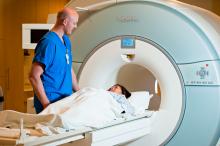

One of the biggest concerns in radiology in recent years is the safety of gadolinium-based contrast agents (GBCAs) used in magnetic resonance imaging (MRI).


A new study published in the Journal of the American College of Cardiology confirms non-invasive cardiac magnetic resonance (CMR) provides a highly accurate means of assessing mitral regurgitation in patients with valvular heart disease. Seth Uretsky, M.D., medical director of cardiovascular imaging and associate director of the Cardiovascular Fellowship Program at Atlantic Health System, served as the study’s lead author.

The American College of Cardiology (ACC) and the Saudi Arabian Cardiac Interventional Society have partnered to implement the NCDR CathPCI Registry in hospitals across Saudi Arabia. The CathPCI Registry assesses the characteristics, treatments and outcomes of heart disease patients who receive diagnostic catheterization as well as percutaneous coronary intervention procedures.

Medical devices, including cardiovascular implantable electronic devices, could be at risk for hacking. In a paper published online in the Journal of the American College of Cardiology, the American College of Cardiology’s Electrophysiology Council examines the potential risk to patients and outlines how to improve cybersecurity in these devices.

The U.S. Food and Drug Administration (FDA) announced that Medtronic is recalling certain implantable cardioverter defibrillators (ICDs) and cardiac resynchronization therapy devices (CRT-Ds) due to a defect in the manufacturing process. The FDA said this defect causes an out-of-specification gas mixture inside the device and may prevent the device from delivering the electrical shock needed to pace a patient’s heartbeat or revive a patient in cardiac arrest.

As a magazine that covers new technology, DAIC is introducing some new technology of its own with this issue — augmented reality. Using an app on your smartphone, you can hover over an augmented reality enabled print page of the magazine and have immediate access to digital content, such as videos, 360 degree view images and videos, or links to related content on the DAIC website without the need to type in URLs. 


February 8, 2018 — The U.S. Food and Drug Administration (FDA) and the Nuclear Regulatory Commission (NRC) recently took steps to ensure a stable and secure supply of a critical radioactive imaging tracer used to detect potentially life-threatening diseases. The FDA approved the NorthStar Medical Radioisotopes' RadioGenix System, a unique system for producing the medical radioisotope molybdenum-99 (Mo-99), the precurser to the making technetium-99m (Tc-99m), the most widely used radioisotope in medical imaging.


February 26, 2018 – The American Society of Echocardiography (ASE) and its International Alliance Partners are joining efforts in the World Alliance of Societies of Echocardiography (WASE) Normal Values Study. This study is bringing together the scientific cardiovascular ultrasound community from around the world to better understand if the current recommended normal values for heart dimensions and function in subjects from different races and countries are similar or different.

February 26, 2018 – Designed specifically for small vessels, Medtronic plc announced U.S. Food and Drug Administration (FDA) approval and U.S. launch of the Resolute Onyx 2 mm Drug-Eluting Stent (DES), what it calls the smallest sized DES on the market.

Subscribe Now