
Feature | Dave Fornell
While the primary reason hospitals adopt new technology is to increase patient care and produce better outcomes, there are many other factors that also affect purchasing decisions.
 September 03, 2008
Technology
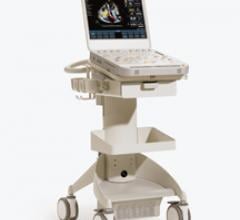
Philips Healthcare has developed a hand-carried ultrasound with reportedly advanced imaging quality. The CX50 CompactXtreme was released in 2009. Primarily designed for echocardiography, the CX50 was designed with many of the same features of the iE33 echocardiography system, providing clinicians a portable ultrasound that can be used for diagnosis.
September 03, 2008Technology
MAQUET Cardiovascular launched HEARTSTRING III Proximal Seal System for coronary artery bypass surgery procedures, a ...
September 03, 2008Sponsored Content

Feature | Nuclear Imaging
Cardiac PET/CT represents a major advancement in cardiovascular diagnostics, offering significant clinical and ...
November 12, 2025News
September 1, 2008 - More than 22 million people worldwide suffer from heart failure, and most heart failure hospitalizations are due to excessive fluid accumulation in the chest cavity, and new data presented at the European Society of Cardiology Congress this week shows Medtronic’s devices equipped with OptiVol Fluid Status Monitoring Alerts may give advance warning of a patients’ worsening c
September 03, 2008Technology
he Powerheart AED G3 is designed with Rescue Ready technology that self-checks all main components daily. The device ...
September 03, 2008Feature | Dave Fornell
As the new editor of Diagnostic and Invasive Cardiology (DAIC), I hope communication will not be one-sided with me presenting or reviewing new technology on the market. I would like to hear from the readers — the end users of these products — to find out your thoughts. I would also like to find out what you consider as important issues, or what technologies you would like to hear more about.
September 03, 2008Sponsored Content
Feature
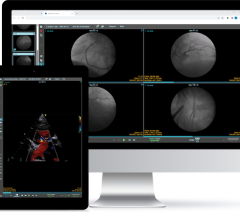
SPONSORED CONTENT — Studycast is a comprehensive imaging workflow system that allows healthcare professionals to work ...
June 17, 2025
Feature | Dave Fornell
Tight inventory control in the cath and electrophysiology (EP) labs is critical to hospitals' bottom lines due to the expense of the items and their rapid expirations. A new technology showing big returns on investment is radio-frequency identification (RFID) tracking.
September 03, 2008Technology
The FDA has cleared Medtronic’s Attain StarFix OTW (over-the-wire) lead (Model 4195), an active fixation left-heart lead for cardiac resynchronization therapy (CRT).
September 03, 2008Technology
The Xcelera R2.2 upgrade is a new version of the Xcelera multimodality cardiology image management, analysis and reporting solution, designed to offer enhanced functionality and greater workflow efficiency.
September 03, 2008Sponsored Content

Feature | Information Technology
Providing exceptional cardiovascular care for patients to achieve the best possible outcomes is the number one goal for ...
March 21, 2024Technology
The recently FDA-approved COGNIS CRT-D and the TELIGEN ICD from Boston Scientific are among the smallest and thinnest high-energy devices at 32.5 cc and 31.5 cc respectively, while less than 10 mm thick. Both devices offer extended battery longevity over previous company devices, self-correcting software and improved programming technology.
September 03, 2008Feature | Venkat Rajan, medical research analyst, Frost & Sullivan
This comparison chart features three categories of stents: coronary, carotid and peripheral. We gratefully acknowledge ...
September 03, 2008Technology
Boston Scientific launched its Atlantis 018 Peripheral Imaging Catheter, which reportedly brings existing 40MHz coronary ...
September 03, 2008Sponsored Content

Feature | Cardiac Imaging
Cardiac positron emission tomography (PET) is growing in popularity among cardiologists because it provides the ability ...
March 05, 2024Technology
The FDA has approved the LipiScan Coronary Imaging System, an angiography laser scanner by InfraReDx Inc., which is intended to characterize fatty deposits in coronary vessel walls using near infrared diffuse spectroscopy.
September 03, 2008News
September 3, 2008 - Endologix Inc. yesterday said six-year patient follow-up data from the company’s Powerlink System ...
September 03, 2008Technology
St. Jude Medical’s Promote RF CRT-D (cardiac resynchronization therapy defibrillator) and Current RF ICD (implantable cardioverter defibrillator) are radiofrequency (RF) wireless devices used to treat patients with heart failure and with potentially lethal heart arrhythmias.
September 03, 2008