MRI brain scan of a 26-day-old neonate with Zika virus. It shows septation in the ventricle at the arrow. See more Zika radiology images at http://pubs.rsna.org/doi/full/10.1148/radiol.2016161584.
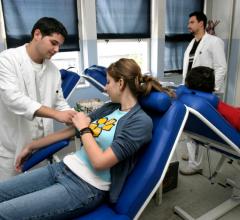
August 26, 2016 — As a further safety measure against the emerging Zika virus outbreak, the U.S. Food and Drug Administration issued a revised guidance recommending universal testing of donated Whole Blood and blood components for Zika virus in the U.S. and its territories.
“There is still much uncertainty regarding the nature and extent of Zika virus transmission,” said Peter Marks, M.D., Ph.D., director of the FDA’s Center for Biologics Evaluation and Research. “At this time, the recommendation for testing the entire blood supply will help ensure that safe blood is available for all individuals who might need transfusion.”
Read the article "Imaging Zika Virus — Radiologic Assessment and Tracking of the Disease."
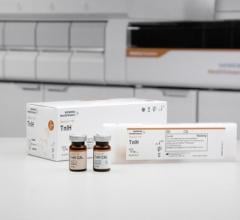
The FDA first issued guidance on Feb. 16 recommending that only areas with active Zika virus transmission screen donated Whole Blood and blood components for Zika virus, use pathogen-reduction devices, or halt blood collection and obtain Whole Blood and blood components from areas of the U.S. without active virus transmission. All areas with active transmission in the U.S. are currently in compliance with this guidance. The revised guidance announced today recommends that all states and U.S. territories screen individual units of donated Whole Blood and blood components with a blood screening test authorized for use by the FDA under an investigational new drug (IND) application, or a licensed test when available. Alternatively, an FDA-approved pathogen-reduction device may be used for plasma and certain platelet products.
The FDA is updating its guidance after careful consideration of all available scientific evidence, consultation with other public health agencies, and taking into consideration the potential serious health consequences of Zika virus infection to pregnant women and children born to women exposed to Zika virus during pregnancy. Testing of donated blood is already underway in Florida and Puerto Rico, as well as in other areas, and it has shown to be beneficial in identifying donations infected with Zika virus. Expanded testing will continue to reduce the risk for transmission of Zika virus through the U.S. blood supply and will be in effect until the risk of transfusion transmission of Zika virus is reduced.
Zika virus is transmitted primarily by the Aedes mosquito. Zika virus can also be spread by sexual contact. Although 4 out of 5 people infected with Zika virus never develop symptoms, when symptoms do occur they may include fever, arthralgia (joint pain), maculopapular rash (red area with small bumps), and conjunctivitis (red, irritated eyes). In addition, Zika virus infection during pregnancy can cause serious birth defects and is associated with other adverse pregnancy outcomes.
“As new scientific and epidemiological information regarding Zika virus has become available, it’s clear that additional precautionary measures are necessary,” said Luciana Borio, M.D., the FDA’s acting chief scientist. “We are issuing revised guidance for immediate implementation in order to help maintain the safety of the U.S. blood supply.”
The first local or non-travel related transmission of Zika virus in the U.S. by mosquitoes was reported from Puerto Rico in December 2015; and soon thereafter, local transmission was reported in American Samoa and the U.S. Virgin Islands. In July 2016, the first cases of local or non-travel related transmission of Zika virus in the continental U.S. were reported in Miami-Dade County, Florida.
In addition to protecting the nation’s blood supply, the FDA works to protect the safety of our nation’s supply of human cells, tissues, and cellular and tissue-based products; supports the development and availability of diagnostic tests that may be useful for identifying the presence of or prior exposure to the Zika virus; works with commercial and government developers to advance the development of investigational vaccines and therapeutics; and monitors for fraudulent products and false product claims related the Zika virus.
For more information: www.cdc.gov/zika/intheus/what-to-do.html

 October 09, 2019