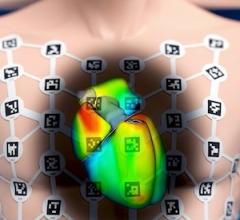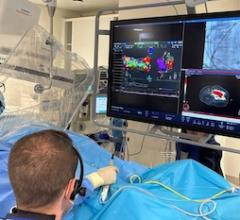
Oct. 10, 2025 — Johnson & Johnson MedTech, in collaboration with the Heart Rhythm Clinical and Research Solutions, LLC., has introduced the Collaborative Outcomes Registry for Evidence in Ventricular Arrhythmias (CORE-VA) during the International Symposium on Ventricular Arrhythmias in Philadelphia, Pennsylvania. The prospective, multicenter registry is designed to capture contemporary practice patterns in ventricular arrhythmia, including ventricular tachycardia (VT), ablation and generate high-quality real-world evidence.
“Real-world standard-of-care registries are essential for refining techniques, guiding training and expanding patient access,” said Francis E. Marchlinski1, M.D., Director of Electrophysiology, University of Pennsylvania Health Care System, and CORE-VA Steering Committee Co-Chair. “CORE-VA could illuminate how we can simplify procedures, further identify and avoid risks, and improve access and outcomes for ventricular arrhythmia patients.”
VT is a rapid heart rhythm that starts in the lower chamber of the heart and is a form of ventricular arrhythmia.i Together with ventricular fibrillation, VT drives the majority of sudden cardiac deaths, resulting in about 300,000 fatalities annually in the United States.ii Since VT ablation is a highly complex procedure, it is typically performed by skilled electrophysiologists with advanced treatment strategies.iii,iv CORE-VA aims to become the largest data repository of ventricular mapping and ablation workflows, technologies and patient outcomes.
“CORE-VA is another example of Johnson & Johnson’s commitment to building rigorous clinical and scientific evidence that shapes the future of arrhythmia care,” said Jennifer Currin Ph.D., Vice President, Scientific Affairs, Electrophysiology, Johnson & Johnson MedTech. “As new technologies are introduced and adopted into clinical practice, this registry will enable us to rapidly collect and analyze real-world data, helping to benchmark outcomes against existing technologies and guide best practices. The insights gained through this collaborative effort have the potential to inform clinical standards, training initiatives and future advancements in this complex arrythmia field.”
Learn more about our MedTech sector’s global scale and deep expertise in surgery, orthopaedics, vision, and cardiovascular solutions at https://thenext.jnjmedtech.com
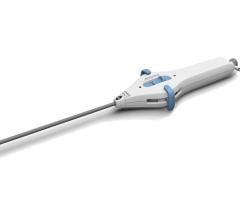
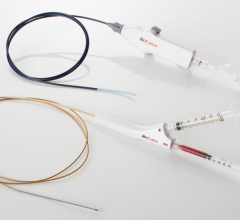
* Only THERMOCOOL Navigation Catheters except for THERMOCOOL SF Catheters and THERMOCOOL SMARTTOUCH SF Catheters, are indicated for the treatment of recurrent drug/device refractory sustained monomorphic ventricular tachycardia (VT) due to prior myocardial infarction (MI) in adults.
1. Dr. Marchlinski serves as a consultant for Johnson & Johnson but was not compensated for this announcement.
i. Mayo Clinic Staff. Ventricular tachycardia. Mayo Clinic. Updated March 6, 2024. Accessed October 2, 2025. www.mayoclinic.org/diseases-conditions/ventricular-tachycardia/symptoms-causes/syc-20355138
ii. Foth C, Gangwani MK, Ahmed I, Alvey H. Ventricular Tachycardia. In: StatPearls [Internet]. Treasure Island (FL): StatPearls Publishing; 2025 Jan-. Last Update: July 30, 2023. Available from: www.ncbi.nlm.nih.gov/books/NBK532954/.
iii. Nof E, Stevenson WG, John RM. Catheter Ablation for Ventricular Arrhythmias. Arrhythm Electrophysiol Rev. 2013 Apr;2(1):45-52. doi: 10.15420/aer.2013.2.1.45. PMID: 26835040; PMCID: PMC4711562.
iv. Falzone PV, Vazquez-Calvo S, Roca-Luque I. Catheter Ablation of Ventricular Tachycardia in Ischemic Heart Disease: What Is Known and New Perspectives. Curr Heart Fail Rep. 2024 Jun;21(3):174-185. doi: 10.1007/s11897-024-00656-y. Epub 2024 Mar 27. PMID: 38536648.
 July 09, 2026