News | EP Lab | May 30, 2024

Penn Presbyterian Medical Center Becomes First Hospital in the Northeast to Adopt Advanced Robotic Technology for Heart Treatment

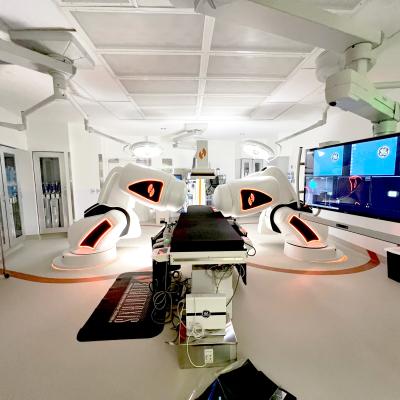
Stereotaxis, a pioneer in surgical robotics for minimally invasive endovascular intervention, announced the successful treatment of the first heart rhythm patients by Penn Presbyterian Medical Center (PPMC) utilizing the advanced Genesis Robotic Magnetic Navigation System.

May 30, 2024 — Stereotaxis, a pioneer in surgical robotics for minimally invasive endovascular intervention, announced the successful treatment of the first heart rhythm patients by Penn Presbyterian Medical Center (PPMC) utilizing the advanced Genesis Robotic Magnetic Navigation System.

PPMC, part of the University of Pennsylvania Health System, renowned for advanced clinical research, innovation, and compassionate patient care, stands at the forefront as the first in the Northeast United States to offer the Genesis System. Genesis is the latest advancement in Robotic Magnetic Navigation technology. Robotic Magnetic Navigation introduces the benefits of robotic precision and safety to cardiac ablation, a common minimally invasive procedure to treat arrhythmias. Tens of millions of individuals worldwide suffer from arrhythmias – abnormal heart rhythms that result when the heart beats too quickly, too slowly, or with an irregular pattern. When left untreated, arrhythmias may significantly increase the risk of stroke, heart failure, and sudden cardiac arrest.

“Our adoption of advanced robotic technology significant enhances our ability to precisely diagnose and treat patients suffering from complex cardiac arrhythmias,” said Dr. Benjamin D’Souza, Cardiac Electrophysiologist at Penn Presbyterian Medical Center. “We are committed to leveraging cutting-edge innovations to provide patients with the best care. Our team has leveraged the precision and safety of robotics to treat patients that often have few other options for care. With unmatched accuracy, we can tailor treatments to each patient's unique anatomy, enhancing safety and efficacy.”

“We are excited to partner with Penn Presbyterian to pioneer the Genesis Robotic System in the Northeast,” said David Fischel, Chairman and CEO of Stereotaxis. “We look forward to supporting Penn Presbyterian in growing a highly successful and impactful robotic heart care program that advances patient care, clinical research and technology advancement.”

For more information: www.stereotaxis.com

Related Content

News | Heart Failure

Jan. 27, 2026 — A new national study reveals a stark disconnect between Americans’ desire for preventive cardiac ...

Home January 27, 2026
Home
News | Heart Failure

Jan. 6, 2026 — Millions of Americans living with heart failure are not receiving medications that have been proven for ...

Home January 10, 2026
Home
News | Heart Failure

Dec. 16,2025 — The European Society of Cardiology (ESC) has welcomed the adoption of the Safe Hearts Plan, a landmark ...

Home December 23, 2025
Home
News | Heart Failure

Dec. 18, 2025 — Heartflow, Inc., a provider of AI technology for coronary artery disease (CAD), has announced the ...

Home December 22, 2025
Home
News | Heart Failure

Dec. 18, 2025 – Ventric Health, a medtech company enabling early detection of heart failure (HF) in a primary care ...

Home December 18, 2025
Home
News | Heart Failure

Oct. 22, 2025 – Ventric Health, a medtech innovator enabling early detection of heart failure (HF) in a primary care ...

Home October 28, 2025
Home
News | Heart Failure

Oct. 16, 2025 — Imbria Pharmaceuticals, has announced a partnership with the Hypertrophic Cardiomyopathy Association ...

Home October 16, 2025
Home
News | Heart Failure

Sept. 24, 2025 — The Family Heart Foundation, a leading research and advocacy organization, has announced the online ...

Home September 24, 2025
Home
News | Heart Failure

Sept. 22, 2025 — The latest findings on heart failure (HF) published by the Heart Failure Society of America (HFSA) ...

Home September 22, 2025
Home
News | Heart Failure

Sept. 11, 2025 — Newswise — A new Mayo Clinic study finds that many heart attacks in people under 65 — especially women ...

Home September 15, 2025
Home
Subscribe Now