News | April 09, 2014

New Ultrasound Method Predicts Blood Clots in the Heart, Brain

Cardiac Ultrasound Blood Clots Heart Brain ACC.14

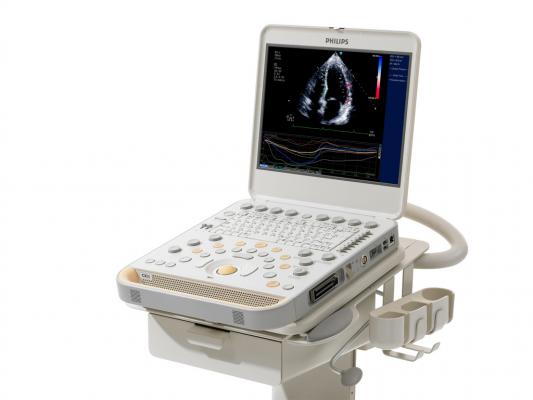
April 9, 2014 — A study with a new ultrasonic scanning technique shows that scanning of the carotid arteries can reveal who is at high risk of being hit by a blood clot. Scanning examines the patient for atherosclerosis, which causes the vast majority of blood clots in the heart, brain or elsewhere in the body

The study "Detection and Impact of Subclinical Coronary and Carotid Atherosclerosis on Cardiovascular Risk Prediction and Reclassification in Asymptomatic U.S. Adults: Insights from the High Risk Plaque Bioimage Study," was presented at the American College of Cardiology (ACC) 2014. Nearly 6,000 apparently healthy Americans participated in the study from 2009 to 2010. The patients received an ultrasound scan of the carotid arteries and computed tomography (CT) scans of the heart. They were then followed to ascertain who got blood clots and other cardiovascular diseases.

Henrik Sillesen, M.D., department of vascular surgery, University Hospital Copenhagen, Denmark, was responsible for conducting and analyzing all cardiac ultrasound scans. He said, "By scanning both carotid arteries and calculating a measure of how much atherosclerosis was present, we could show that those who had much atherosclerosis were three times as likely to develop coronary heart disease in the form of thrombosis, need for heart surgery, etc., as those who had veins without evidence of atherosclerosis. Even those with only moderate amounts of atherosclerosis had more than twice as likely as those with normal veins. "

Ultrasound proved to be just as good as cardiac CT scan, which hitherto has been considered the best method. Since ultrasound equipment is smaller, less expensive, mobile and does not use X-rays, the study suggests this method may be better than CT for the study of healthy people who want to know if they are at risk.

For more information: content.onlinejacc.org/article.aspx?articleid=1856105


Related Content

News | Cardiovascular Clinical Studies

Nov. 10, 2025 —Genomics, a science-led techbio company, has today announced new research that suggests polygenic risk ...

Home November 12, 2025
Home
News | Cardiovascular Clinical Studies

Oct. 21, 2025 – AskBio Inc., a gene therapy company wholly owned and independently operated as a subsidiary of Bayer AG ...

Home October 21, 2025
Home
News | Cardiovascular Clinical Studies

Aug. 25, 2025 — Merck, known as MSD outside of the United States and Canada, has announced that new clinical trial and ...

Home August 25, 2025
Home
News | Cardiovascular Clinical Studies

Aug. 18, 2025 — (Newswise) It’s often mistaken for a heart attack, but Takotsubo cardiomyopathy — previously known as ...

Home August 21, 2025
Home
News | Cardiovascular Clinical Studies

Aug. 20, 2025 — A major international study published in Atherosclerosis* has found that routinely testing for ...

Home August 20, 2025
Home
News | Cardiovascular Clinical Studies

Aug. 4, 2025 — Marea Therapeutics, Inc., a clinical-stage biotechnology company that develops next-generation medicines ...

Home August 04, 2025
Home
News | Cardiovascular Clinical Studies

July 16, 2025 — Medtronic has announced that the first patient has been enrolled in the PEripheral Onyx Liquid Embolic ...

Home July 22, 2025
Home
News | Cardiovascular Clinical Studies

June 11, 2025 — Bayer and the Broad Institute have have extended their research collaboration of 10 years by an ...

Home June 11, 2025
Home
News | Cardiovascular Clinical Studies

May 27, 2025 — Despite scientific advances in cardiovascular care, people in living in rural areas and other communities ...

Home May 27, 2025
Home
News | Cardiovascular Clinical Studies

May 20, 2025 — Shockwave Medical, Inc., part of Johnson & Johnson MedTechhas announced the 30-day primary endpoint ...

Home May 21, 2025
Home
Subscribe Now