April 6, 2011 – One-year results from the pivotal PLATINUM Workhorse trial were presented at the American College of Cardiology (ACC) Scientific Session in New Orleans. The trial compared the safety and effectiveness of Boston Scientific’s Promus Element everolimus-eluting platinum chromium (PtCr) coronary stent to the Promus everolimus-eluting coronary stent.
The trial demonstrated the clinical non-inferiority of the Promus Element in comparison to the Promus in treating de novo coronary artery lesions, while showing a procedural benefit of reduced rates of unplanned (bail-out or emergency) stenting.
Results were presented by Gregg W. Stone, M.D., professor of medicine and director of research and education at the Center for Interventional Vascular Therapy at Columbia University Medical Center/New York-Presbyterian Hospital and global principal investigator of the trial. Results were also published concurrently in the online version of the Journal of American College of Cardiology (JACC) and will be available in the April 19 print edition.
"The Promus Element platinum chromium stent met the primary non-inferiority endpoint of target lesion failure at one year compared to the Promus stent, while demonstrating excellent safety and effectiveness with low rates of cardiac death, myocardial infarction, stent thrombosis and revascularization," Stone said. "The remarkably low rates of stent thrombosis and target lesion revascularization at one year confirm the successful transfer of the favorable outcomes associated with everolimus to the novel platinum chromium stent design."
The primary endpoint of non-inferiority for the Promus Element stent compared to the Promus stent was met with a 12-month target lesion failure (TLF) rate in the per protocol population of 3.4 percent versus 2.9 percent, respectively (pNI=0.001). No statistically significant differences in TLF components were observed between the two stents. In the intention-to-treat population, TLF (3.5 percent vs. 3.2 percent, p=0.72), cardiac death related to the target vessel (0.8 percent vs. 0.4 percent, p=0.51), myocardial infarction (MI) related to the target vessel (0.8 percent vs. 1.6 percent, p=0.14) and ischemia-driven target lesion revascularization (TLR, 1.9 percent vs. 1.9 percent, p=0.96) were all similar. Low rates of target vessel revascularization (TVR, 2.7 percent vs. 2.9 percent, p=0.83) and stent thrombosis (ARC definite/probable, 0.4 percent vs. 0.4 percent, p=0.99) were also observed at 12 months for the Promus Element and Promus stents.
Both stents achieved high rates of technical success (99.4 percent for Promus Element vs. 98.8 percent for Promus, p=0.14) indicating successful delivery and deployment of the stent to the target vessel. The Promus Element achieved a significant reduction in unplanned (bail-out or emergency) stenting (5.9 vs. 9.8 percent, p=0.004), including a significantly lower rate of inadequate lesion coverage (1.4 vs. 3.4 percent, p=0.01). These clinical observations are consistent with the results of comparative bench and animal studies, which have demonstrated the enhanced visibility of the Promus Element relative to the Promus.
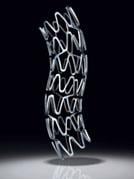
The Promus Element received CE mark approval and was launched in Europe and other international markets in 2009. It features a PtCr alloy and new stent design to offer greater strength, enhanced deliverability and good visibility. The thin-strut stent is designed for improved conformability, minimal recoil and uniform lesion coverage and drug distribution. The advanced low-profile delivery system facilitates precise delivery of the stent across challenging lesions.
The PLATINUM clinical program is evaluating the safety and effectiveness of the Promus Element stent in five multi-center studies totaling more than 1,800 patients, including single-arm studies evaluating small vessels, long lesions, pharmacokinetics, and quantitative coronary angiography and intravascular ultrasound data. PLATINUM Workhorse is a global, randomized, pivotal controlled trial designed to support U.S. Food and Drug Administration (FDA) approval of the Promus Element. The trial enrolled 1,530 patients with up to two de novo lesions at 132 sites worldwide, and completed enrollment in September 2009.
For more information: www.bostonscientific.com
 August 06, 2026