May 14, 2012 -- Heart attack patients in North Carolina who were rushed directly to hospitals equipped to do percutaneous coronary intervention (PCI) received treatment significantly faster than patients first taken to hospitals unequipped to perform PCI and then later transferred for treatment, according to research reported at the American Heart Association's Quality of Care and Outcomes Research 2012 Scientific Sessions.
The study focused on the most serious form of heart attack, ST-elevation myocardial infarction (STEMI). A STEMI typically involves complete blockage of the blood flow to the heart. Opening the blocked artery as quickly as possible is crucial to improving survival.
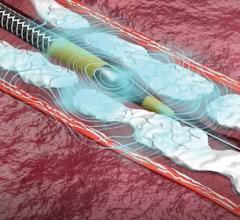
Physicians often use PCI, also known as angioplasty, to open blocked coronary arteries. A tiny balloon is inserted through a catheter, or tube, into the affected area. The balloon is inflated to widen the blocked areas. Physicians often combine the procedure with the insertion of a stent to help prop the artery open and decrease the chance of another blockage.
Opening the blockage with clot-busting drugs is used when timely access to PCI is not an option. Many emergency medical services (EMS) guidelines for transporting STEMI patients recommend bypassing hospitals that can't provide PCI and going to one that can.
"Until now, no well-designed study had examined this recommendation," said Emil L. Fosbol, M.D., Ph.D., the study's first author and a
research fellow at Duke University in Durham, N.C. "The only rationale we had was the sooner you get there, the better."
The researchers reviewed North Carolina's EMS records from June 2008 to September 2010 and linked these to a clinical registry of patients with STEMI. Of the 1,224 STEMI patients who met the study's specifications, 765 (63 percent) went directly to a PCI-capable hospital (bypass group), and 479 (37 percent) stopped first at a non-PCI hospital (non-bypass group) before being transferred for a PCI procedure.
Researchers found:
-- The time from first medical contact (FMC) to artery-opening treatment -- PCI or clot-busting drug -- averaged 93 minutes for the bypass group and 124 minutes for the non-bypass group, a substantial time difference that could improve a STEMI patient's chances of surviving.
-- For patients who received only PCI, the time from FMC to PCI averaged 93 minutes for the bypass group and 161 minutes for the non-bypass arm.
-- Patients in the bypass group were almost three times as likely to get treatment within guideline recommendations compared to the non-bypass group.
"PCI is contingent on getting the patient very quickly to a hospital with a catheter lab," Fosbol said. "Our results suggest that when
logistically feasible, EMS should transfer STEMI patients directly to the nearest PCI-capable hospital."
For more information: www.heart.org/myhospital

 August 28, 2026