May 12, 2012 — Sorin Group announced at the Heart Rhythm Society (HRS) annual scientific sessions, the publication of the CLEAR study results in Europace (May 1, 2012, doi:10.1093/europace/eus059). The study demonstrates the clinical benefit of the SonR sensor based cardiac resynchronization therapy (CRT) optimization system in heart failure (HF) patients.
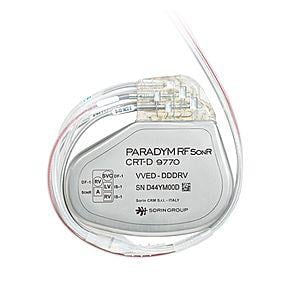
SonR is the first and only system to provide weekly automatic optimization during patient’s daily activities as an alternative to in-clinic manual echocardiography-based device settings. The unique SonR system consists of a dedicated sensor embedded in the tip of a pacing lead implanted with the CRT device. The sensor’s advanced technology allows direct measurement of real-time cardiac contractility and uses this hemodynamic signal to optimize the device’s parameters for each individual patient at rest and exercise.
The CLEAR clinical study, a prospective, multicenter, single-blind, randomized study conducted in 51 centers in eight European countries enrolled 238 patients with severe HF (New York Heart Association [NYHA] functional class III and IV and a left ventricular ejection fraction [LVEF] less than 35 percent). Study results at one year showed that with SonR’s regular automatic optimization of the device’s atrio-ventricular and inter-ventricular delays, 76 percent of patients were classified as improved, compared with 62 percent in the group of patients with standard CRT programming (p=0.0285).
“The publication of the CLEAR study is a remarkable milestone in the treatment of heart failure patients indicated for CRT,” said Philippe Ritter, M.D. University Hospital of Bordeaux, France and principal investigator of the CLEAR clinical trial. “The regular automatic optimization provided by SonR demonstrates significant increase in the proportion of heart failure patients improving with this therapy. It is the first time a device-based algorithm has demonstrated the ability to improve patient outcomes in a prospective, randomized trial. CRT optimization is usually performed in non-responder patients through an expensive, complex and time-consuming echocardiographic procedure. The SonR system optimization is automatic, individualized and performed on a regular basis by the device in all patients. It has the potential to reduce the number of echocardiographic procedures and its related costs.”
“We are very satisfied with the results of the prospective, randomized CLEAR trial which demonstrates that the SonR system provides unique clinical benefit for CRT patients. These results clearly highlight our ongoing commitment to innovation in the hemodynamic management of heart failure patients,” said Stefano Di Lullo, Sorin Group, president of the CRM business unit.
About SonR
The result of a 10-year clinical science program, the SonR sensor uniquely measures patient’s cardiac muscle vibrations related to the first heart sound. These real-time measurements are transmitted to the CRT-D device which uses them to determine the best settings for the patient. Every week, the system automatically optimizes to adapt to the patient’s changing condition. SonR measurements correspond to LVdP/dtmax, the gold standard for assessing left ventricular contractility, a key indicator of cardiac performance. SonR is the only CRT optimization system that automatically optimizes patients every week and importantly, while the patient is active, providing real-life optimization.
For more information: www.sorin.com

 September 02, 2026