News | May 12, 2015

SCAI 2015 Case Studies Will Support Value of Accrediation for Cardiovascular Excellence Credentials

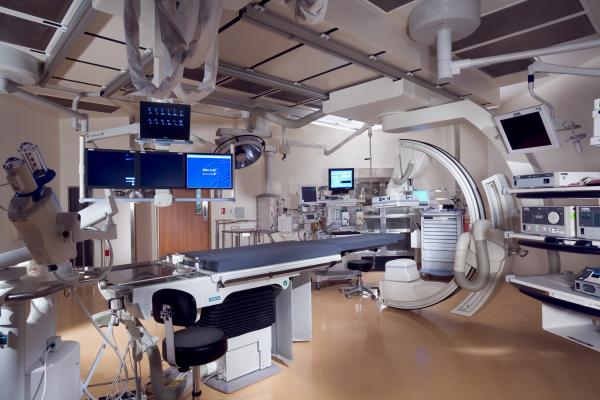
ACE cath/PCI labs continually meet highest standards in quality, performance and outcome measures

ACE, accreditation, cath lab, PCI, SCAI 2015, case studies

May 13, 2015 — For the first time, cardiac catheterization laboratory stakeholders now have quality metrics that confirm the value of Accreditation for Cardiovascular Excellence (ACE) accreditation. Three new studies validating the benefits of ACE accreditation were presented during the 2015 Society for Cardiovascular Angiography and Interventions (SCAI) Scientific Sessions in San Diego, California, May 6-9.

In the series of studies, Bonnie H. Weiner, M.D., MSEC, MBA, MSCAI, FACC, and colleagues examined multiple quality, performance and outcome measures among 24 facilities that have achieved full ACE accreditation for their diagnostic cardiac catheterization and percutaneous coronary intervention (cath/PCI) programs; the group also studied four facilities that did not meet the rigorous standards for ACE accreditation.

"We found that ACE-accredited cardiac catheterization laboratories were significantly more likely than non-accredited facilities to meet the highest-quality standards for more than a dozen structural, process-related and procedural domains," said Weiner, ACE's chief medical officer. "These data clarify and support the critical role of ACE accreditation in assisting facilities to provide excellent cardiovascular care."

The studies focused on structural and process domains (Abstract 13849) and case-level procedural characteristics (Abstract 13862) that significantly differentiated ACE-accredited cardiac catheterization laboratories from facilities that did not achieve accreditation. Additional survey data highlighted the perceived value of undergoing the ACE external review and accreditation and process (Abstract 13833).

"More than 90 percent of ACE-accredited facilities feel that accreditation adds substantial value to their organization in terms of improved care quality," Weiner said. "The value proposition of ACE accreditation touches every aspect of the cardiac catheterization laboratory, from enhanced patient safety to improved staff confidence and morale."

Data Presented
Performance on multiple outcomes measures differed significantly between cardiac catheterization laboratories that achieved accreditation through ACE and those that did not initially achieve accreditation, according to fthe data. Overall, outcomes on 11 measures related to appropriate use criteria (AUC), procedural findings, and other metrics were significantly different between invasive cardiac cases performed at accredited versus non-accredited facilities.

To identify potential performance differences between facility types, the investigators compared case data from 1,445 patients undergoing invasive cardiac procedures at 20 ACE-accredited facilities to data from 445 patients treated at 4 facilities that did not meet the rigorous standards for ACE accreditation. All case review data were entered into a uniform case report form and analyzed with standard statistical software (JMP 11.2.0).
 
"We found statistically significant differences across multiple performance domains that distinguish the invasive procedures performed at ACE-accredited cardiac catheterization laboratories from those performed at non-accredited facilities," Weiner said. "These findings demonstrate that ACE-accredited facilities are delivering quality cardiac care that is more likely to be consistent with national standards of cardiovascular excellence."
 
The invasive procedures performed at ACE-accredited facilities were more likely than those at non-accredited facilities to be characterized by diagnostic AUC scored as appropriate (74.1% vs. 57.7%; p<0.0001), adequate opacification (93.1% vs. 82.0%; p<0.0001), and adequate lesion characterization (91.3% vs. 83.8%; p<0.0001).
 
Standardizing the documentation and reporting of key procedural details is critically important for demonstrating appropriate use and medical necessity. Overall case assessments were significantly more likely to be deemed appropriate for the invasive cardiac procedures performed at ACE-accredited facilities compared with those performed at non-accredited facilities (73.6 vs. 63.1%; p<0.0001).
 

For more information: www.cvexcel.org


Related Content

Feature | Cath Lab | Kyle Hardner

Since receiving FDA approval in 2016, intravascular lithotripsy (IVL) systems have grown in popularity among ...

Home November 14, 2025
Home
News | Cath Lab

Nov. 11, 2025 — FastWave Medical has successfully completed enrollment in its 30-patient coronary feasibility study and ...

Home November 13, 2025
Home
News | Cath Lab

Oct. 28, 2025 — Results from the first-of-its-kind randomized PROCTOR trial found that a strategy of saphenous vein ...

Home November 04, 2025
Home
News | Cath Lab

Oct. 27, 2025 — Results from the PREVUE-VALVE study suggest that there are currently at least 4.7 million people aged 65 ...

Home October 29, 2025
Home
News | Cath Lab

Oct. 25, 2025 — Medtronic plc has announced the launch of the Stedi Extra Support guidewire, designed to enhance ...

Home October 28, 2025
Home
News | Cath Lab

Oct. 27, 2025 — Elixir Medical, a developer of technologies to treat cardiovascular disease, has announced new clinical ...

Home October 28, 2025
Home
News | Cath Lab

Oct. 22, 2025 — Heartflow, Inc. has introduced Heartflow PCI Navigator, the newest addition to the Heartflow One ...

Home October 23, 2025
Home
News | Cath Lab

Oct. 15, 2025 — Stereotaxis recently announced it has obtained CE Mark in Europe and submitted a 510(k) application to ...

Home October 16, 2025
Home
News | Cath Lab

Oct. 7, 2025 — Medtronic has announced the full distribution of the Neuroguard IEP System (Neuroguard) after a ...

Home October 07, 2025
Home
News | Cath Lab

Sept. 22, 2025 — Nicklaus Children's Heart Institute in Miami, Florida, is now offering bedside transcatheter patent ...

Home September 23, 2025
Home
Subscribe Now