May 22, 2015 — St. Jude Medical Inc. announced new results from two clinical studies further supporting the use of its fractional flow reserve (FFR) technology to optimize percutaneous coronary intervention (PCI) procedures. The studies — a 15-year follow-up to the DEFER study and primary results from the CONTRAST study — were presented during hotline sessions at EuroPCR 2015. Combined, the studies contribute to the growing body of evidence supporting FFR as a valuable and important decision-making tool for physicians.
Coronary artery disease (CAD) is the most common type of heart disease, and affects millions of people worldwide. The condition is caused by a narrowing or blocking of the arteries due to plaque which restricts blood flow, and reduces the amount of oxygen to the heart. Physicians often use angioplasty, or PCI, to treat narrowed vessels and restore blood flow to the heart.
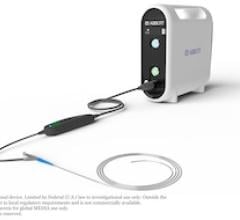
St. Jude Medical’s PressureWire FFR technology supports better treatment decisions for patients by providing a more detailed, physiologic analysis of blood flow blockages in the heart. Specifically, FFR can help accurately identify which coronary lesions or blockages are responsible for obstructing the flow of blood to a patient’s heart muscle. This insight allows physicians to determine which lesions warrant stenting, resulting in improved patient outcomes and reduced healthcare costs.
The DEFER Study
In a 15-year follow up study, new data from the DEFER study confirms original and five-year findings. Researchers leading the DEFER study found the positive benefits of decisions based on St. Jude Medical PressureWire FFR guidance were sustained after 15 years. The study also found the risk for a myocardial infarction was 6.5 times lower in patients where treatment was guided by FFR compared to patients in the non-FFR guided group; no negative effect was found from leaving non-significant lesions untreated.
The DEFER study’s 15-year data confirms sustained benefits of FFR guidance over time. After 15 years, DEFER researchers found stenting a non-ischemic stenosis had no benefit compared to patients treated by standard medical therapy. In addition to a reduction in heart attacks, patients where revascularization was deferred had very low rates of complications compared to patients in which lesions were treated without proof of ischemia.
“We are pleased to see the sustained benefits of this study over 15 years. We also find it quite important that there were no myocardial infarctions as a result of deferring non-significant lesions, based upon FFR guidance,” said original DEFER investigator Nico Pijls, M.D., Ph.D., of the Catharina Hospital in Eindhoven, the Netherlands. “This study confirms the long-term importance of using FFR to guide PCI and improve the outcome of stenting.”
The CONTRAST Study
In the CONTRAST study, researchers assessed FFR differently. The study compared FFR using adenosine, the gold standard in vascular physiologic assessment, to resting indices (Pd/Pa and iFR) and a new approach to adenosine-free FFR — FFR using contrast medium. Contrast FFR (cFFR), also known as contrast Pd/Pa, is a new diagnostic approach where the hyperemic effect (an increase in blood flow) is induced by contrast medium in place of adenosine.
The study found that cFFR provides superior accuracy compared to resting indices such as iFR or resting Pd/Pa. To date, simplifying physiologic assessment using resting indices has resulted in a reduction in accuracy, which has limited adoption. The CONTRAST study found both Pd/Pa and iFR to offer similar rates of accuracy. In addition, the study’s researchers concluded cFFR did not add extra cost or procedure time and may be a viable option for situations where the use of adenosine is undesired or contraindicated.
For more information: www.sjm.com

 September 02, 2026