News | Heart Failure | June 24, 2015

Scott & White Memorial Uses CardioMEMS HF System to Help Heart Failure Patients

Hospital is sixth in Texas to adopt new remote monitoring device for heart failure

CardioMEMS, Scott & White Memorial, Texas, heart failure, remote monitoring

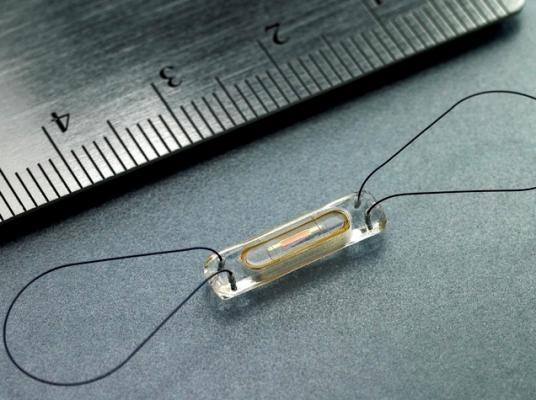
June 24, 2015 ­- Scott & White Memorial – Temple for the first time implanted a new miniaturized, wireless monitoring sensor to help manage heart failure (HF). Scott & White Memorial is one of six hospitals in Texas and the first hospital in the Baylor Scott & White Health system to offer the device.

"We are always looking for new and innovative ways to treat our patient's disease process and improve outcomes for heart failure patients," said Robert Scott III, M.D., director for advanced heart failure at Scott & White Memorial. "This device will give us the ability to anticipate problems with our patients before they occur, decreasing their chance of being re-admitted to the hospital, and improving their quality of life."

Memorial implemented the CardioMEMS HF System, a U.S. Food and Drug Administration (FDA)-approved heart failure monitoring device proven to significantly reduce hospital admissions.

The device is a sensor that is implanted in the pulmonary artery (PA) during a minimally invasive procedure. Once implanted, the device can measure and transmit PA pressure from the patient back to their healthcare team. Elevation in PA pressure appears even before changes in weight and blood pressure in the patient, which are traditionally used as indirect measures of worsening heart failure. The new system allows patients to transmit daily sensor readings from their homes to their healthcare providers allowing for personalized and proactive management to reduce the likelihood of hospitalization and onset of debilitating symptoms.

"Heart failure can rob patients' quality of life and frequently results in repeated hospitalizations," said John Erwin III, M.D., cardiologist at Scott & White Memorial. "We think that we can provide significantly improved quality of life by partnering with the patient in acting preventatively as opposed to responding when an adverse event occurs."

For more information: www.sw.org


Related Content

News | Heart Failure

March 24, 2026 — New research shows that small improvements to sleep, diet quality and physical activity, made in ...

Home March 25, 2026
Home
News | Heart Failure

March 16, 2026 — Cytokinetics has announced four presentations related to Myqorzo (aficamten) at the American College of ...

Home March 16, 2026
Home
Feature | Heart Failure | Rohit Sood, MD, PhD

Cardiovascular disease (CVD) is a serious global health burden that encompasses a broad group of diseases that affect ...

Home February 12, 2026
Home
News | Heart Failure

Feb. 3, 2026 — Bristol Myers Squibb has launched "Change the Target. Change What’s Possible," an educational campaign ...

Home February 03, 2026
Home
News | Heart Failure

Jan. 27, 2026 — A new national study reveals a stark disconnect between Americans’ desire for preventive cardiac ...

Home January 27, 2026
Home
News | Heart Failure

Jan. 6, 2026 — Millions of Americans living with heart failure are not receiving medications that have been proven for ...

Home January 10, 2026
Home
News | Heart Failure

Dec. 16,2025 — The European Society of Cardiology (ESC) has welcomed the adoption of the Safe Hearts Plan, a landmark ...

Home December 23, 2025
Home
News | Heart Failure

Dec. 18, 2025 — Heartflow, Inc., a provider of AI technology for coronary artery disease (CAD), has announced the ...

Home December 22, 2025
Home
News | Heart Failure

Dec. 18, 2025 – Ventric Health, a medtech company enabling early detection of heart failure (HF) in a primary care ...

Home December 18, 2025
Home
News | Heart Failure

Oct. 22, 2025 – Ventric Health, a medtech innovator enabling early detection of heart failure (HF) in a primary care ...

Home October 28, 2025
Home
Subscribe Now