Image courtesy of Bakoulev Scientific Center for Cardiovascular Surgery
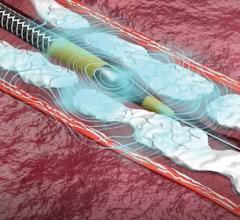
May 18, 2016 — Bioabsorbable heart valves or blood vessels are designed to harness the body’s innate healing process, enabling the natural restoration of complex body parts as the synthetic graft is absorbed. At the 96th American Association for Thoracic Surgery (AATS) Annual Meeting, surgeons from the Bakoulev Center for Cardiovascular Surgery, Moscow, reported the results of implantation of bioabsorbable vascular grafts placed into five children born with serious cardiovascular anomalies. According to the investigators, this is the first-ever clinical trial of a bioabsorbable cardiovascular device.
“The positive results of the study provide hope for a new therapeutic approach in cardiovascular valve replacement called Endogenous Tissue Restoration (ETR). This is potentially a revolutionary approach to regenerative medicine in cardiovascular treatment,” said lead investigator Leo Bockeria, M.D.
The procedure was designed to help children born with single-ventricle anomalies, a term used to describe a group of cardiac defects that shares the common feature that only one of two ventricles functions adequately. This can be due to lack of a heart valve, abnormal pumping ability of the heart or other problems. The surgical procedure, known as a Fontan procedure, involves diverting the venous blood from the right atrium to the pulmonary arteries without passing through the area of the right ventricle.
In this prospective, single-center feasibility study, five children aged 4.5 to 12.5 years born with a single-ventricle congenital malformation were implanted with a bioabsorbable graft connecting the inferior vena cava with the right pulmonary artery during an extracardiac Fontan procedure. Patients were followed for 12 months after surgery using echocardiography, computed tomography (CT) scan and magnetic resonance imaging (MRI). No device-related adverse events were reported.
The grafts are composed of supramolecular bioabsorbable polymers, manufactured using a proprietary electrospinning process by European medical device company Xeltis. The grafts have no size limitations, although this study used grafts that were 18 and 20 mm in diameter. Histological studies of the grafts in sheep have shown that graft implantation is followed by initial infiltration of inflammatory cells, which induces physiological healing and tissue formation. This is followed by degradation of the implant scaffold with eventual reduction of the inflammatory response.
The investigators reported that all five patients successfully recovered from the procedure, with significant improvement noted in the patients’ general condition. Imaging studies demonstrate anatomical and functional stability of the grafts.
Although longer follow-up is needed, the investigators said that the procedure has the potential to improve cardiac and vascular surgical procedures by reducing complications resulting from permanently-placed implants. This is especially important for a child who must live with the after-effects of surgery over his lifetime.
The Xeltis bioabsorbable pulmonary heart valve will enter clinical trials in Europe this year. The U.S. Food and Drug Administration (FDA) has recently granted a Humanitarian Use Device (HUD) designation for the device for the the correction or reconstruction of right ventricular outflow tract (RVOT).
For more information: www.aats.org

 August 28, 2026