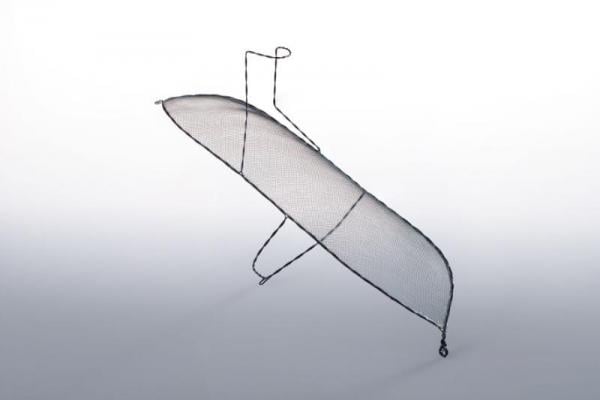
September 29, 2016 — Keystone Heart Ltd. recently announced the safety and efficacy of the TriGuard Cerebral Embolic Protection device during transcatheter aortic valve replacement (TAVR), according to preliminary findings discussed at the PCR London Valves 2016 Conference. The findings were drawn from real-world experience of 51 patients.
Results demonstrated a significant difference in the number of patients with brain lesions incurred during the TAVR procedure, with 68 percent of unprotected patients experiencing new lesions compared to only 20 percent of patients for which the TriGuard embolic deflection device was used (p=0.004). These results were based on magnetic resonance imaging (MRI) evaluations of patients conducted by Joachim Schofer, M.D., professor, Hamburg University Cardiovascular Center and Department of structural heart disease, Hamburg, Germany.
“These data, together with previously reported positive safety, and clinically meaningful outcomes, reinforce the importance of using TriGuard to protect the brain from damage potentially incurred during TAVR procedures,” said Alexandra J. Lansky, M.D., Division of Cardiology, Yale School of Medicine and Yale Cardiovascular Research Group, New Haven, Connecticut.
The aim of the study was to evaluate the safety and effectiveness of the TriGuard HDH embolic deflection device in protecting the brain from lesions during TAVR procedures compared to the current standard of care in the United States and Europe, which is no cerebral protection during these procedures. The TriGuard device is commercially available in Europe but it is not yet commercially available in the U.S.
In this real-world study, physicians from two institutions enrolled a total of 51 patients undergoing TAVR (80± 8 years, 51 percent male, logistic EuroSCORE 12.6±8.3) with either transfemoral (96 percent) or transapical (4 percent) insertion. Peter R. Stella, Ph.D., M.D., Department of Cardiology, University Medical Centre Utrecht, Utrecht, The Netherlands enrolled 41 patients and Schofer enrolled 10. The 10 enrolled by Schofer were also tested with post-TAVR MRI using clinical criteria, and were compared to 150 historical controls from the same institution.
Of the 51 patients protected by the TriGuard device in this study, none experienced strokes, and a successful device performance of 100 percent was observed without interference during TAVR procedures.
In the MRI arm of the study, additional endpoints demonstrated clear improvement in the mean number of new lesions (2.1 for unprotected historical controls versus 0.06 for protected patients, p= 0.06), mean total lesion volume (206 mm3 for unprotected historical controls versus 44 mm3 for protected patients, p=0.08) and mean single lesion volume (74 mm3 for unprotected historical controls versus 15 mm3 for protected patients, p=0.05).
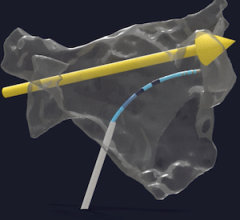
TriGuard is a cerebral embolic protection device designed to reduce the amount of embolic material that enter blood circulation to the brain during transcatheter heart valve replacement or implantation. According to Keystone Heart, TriGuard is the only device designed to provide full coverage of all brain territories without the need for third access site during TAVI.
At the PCR London Valves conference, Lansky is also presenting an update on NeuroARC, an initiative aimed at establishing standardized neurologic endpoints for cardiovascular clinical trials to ensure clinically meaningful patient outcomes and improve the quality of clinical research. The initiative is spearheaded by a diverse working group comprised of physician and scientific leaders in interventional and structural cardiology, cardiac surgery, neurology, neuroradiology and neuropsychology, as well as clinical trialists representing academic research organizations from the United States and Europe, and representatives from the medical device industry and the U.S. Food and Drug Administration (FDA).
“Neurologic damage due to TAVR is overlooked, and protecting the brain has become a priority to improve our patients’ outcomes,” stated Lansky. “Consensus-driven definitions of neurologic measures will facilitate more informed benefit-risk assessments for all procedures and devices, and improve our care of patients.”
For more information: www.keystoneheart.com

 August 28, 2026