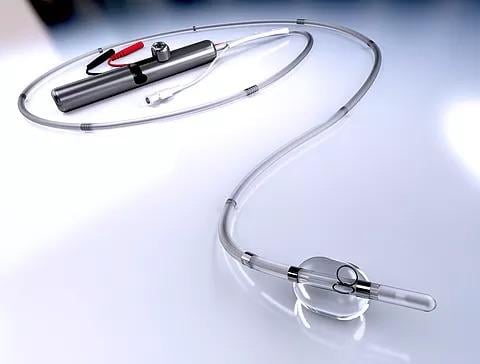
May 13, 2019 — BioTrace Medical Inc. announced the company’s Tempo Lead has obtained CE Mark certification in Europe for use in cardiac procedures requiring temporary intracardiac pacing.
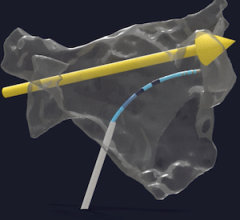
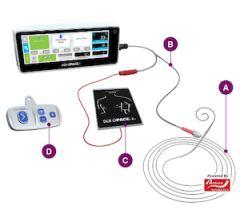
BioTrace Medical’s Tempo Temporary Pacing Lead is designed for safer, more secure and stable pacing to reduce intraprocedural complications, including perforation and valve embolization. In addition, the Tempo Lead allows patients to ambulate sooner after procedures such as transcatheter aortic valve replacement (TAVR) and transcatheter mitral valve replacement (TMVR), accelerating recovery times, and enabling patient transfer directly to a step-down or telemetry unit instead of an ICU or CCU.
Cleared by the U.S. Food and Drug Administration (FDA) in October 2016, the Tempo Lead’s design, featuring novel retractable stabilizer loops and a soft tip, mitigates the risks of dislodgment and perforation and ensures stability during rapid pacing.
In a U.S. multi-center retrospective study1 of 269 patients led by Columbia University Medical Center and presented at the American College of Cardiology’s Annual Scientific Session in 2018, the Tempo Lead was successfully placed in 98.1 percent of the cases with no cardiac perforations, pericardial effusions or sustained device-related arrhythmias, and only a 0.8 percent loss of pace capture. The Tempo lead was left in place post-procedure in 71.6 percent of the cases, of which 84.1 percent mobilized out of bed while maintaining stable pace capture with no dislodgment. The study confirmed the Tempo Lead is safe and effective for temporary cardiac pacing, provides stable peri- and post-procedural pacing support, and facilitates post-procedure ambulation, which can safely allow direct transfer to step-down or telemetry units with no ICU time required, reducing length of stay.2
In addition, the Tempo Lead allows watchful waiting after procedures, potentially avoiding permanent pacemaker implantation in patients with transient conduction disturbances that may resolve on their own with time. The European Society of Cardiology cardiac pacing guidelines recommend a seven-day period of clinical observation to assess the type and significance of disturbances before permanent pacemaker implantation,3 a period of time in which the need for safe and stable temporary pacing allowing ambulation is even more important. These benefits are increasingly significant as TAVR procedures expand to intermediate and low-risk patients.
The design of conventional temporary pacing leads can cause serious complications, including perforation of the heart wall, which may lead to potentially life-threatening compression of the heart. Additionally, conventional leads can easily dislodge from the heart, often resulting in loss of pacing with serious consequences for the patient. As a result, patients are routinely limited to bed rest for the duration of temporary pacing, delaying ambulation and thereby increasing length of stay in costly hospital units such as intensive care.
For more information: www.biotracemedical.com
References
1. Nazif, T et al. Analysis of the Initial United States Experience with the BioTrace Tempo Temporary Pacing Lead in Transcatheter Aortic Valve Replacement (TAVR) and Other Cardiac Procedures, Journal of the American College of Cardiology, Volume 71, Issue 11, Supplement, 2018, Page A1285, ISSN 0735-1097, https://doi.org/10.1016/S0735-1097(18)31826-6
2. Yakubov SR. TCT 2017: How to Manage Conduction Abnormalities and Pacemaker Implantation (temporary and permanent) After TAVR. November 1, 2017, https://www.tctmd.com/videos/how-to%C2%85-manage-conduction-abnormalities-and-pacemaker-implantation-temporary-and-permanent-after-tavr.f1c14ee9364243e0abd8e604545cda07

 August 28, 2026