It’s been no secret that the American healthcare system needed to change to survive economically into the future, but the question has been how this massive undertaking could be accomplished. The Affordable Care Act (ACA) was born out of concern over annual healthcare expenditures growing at unsustainable rates, projections that Medicare would no longer be able to pay its bills in the coming years and data showing that other countries offer higher levels of care at lower costs per patient.
Zoll Medical Corporation, a manufacturer of medical devices and related software solutions, announced that RAV Gelderland-Midden in the Netherlands has equipped its fleet of 20 ambulances with the Zoll AutoPulse Non-invasive Cardiac Support Pump.
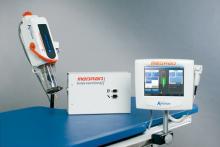
There have been several recent advances with contrast media injector technology, including cutting costs by reducing contrast waste and automated data collection for the dose a patient receives. Automated injector systems not only precisely control the amount of contrast used; vendors have moved into the software/IT arena by offering personalized doses for patients using information pulled from an electronic medical record (EMR) or picture archiving and communication system (PACS). Contrast dose recording software also offers new possibilities for radiology departments looking to streamline and document their contrast media usage. Some vendors have now integrated X-ray radiation dose recording capabilities as well.
If you enjoy this content, please share it with a colleague
Advanced visualization (AV) software and clinical applications are essential in the interpretation workflow of computed tomography (CT) and magnetic resonance imaging (MRI). In the last few years, the market success of new premium scanners has also hinged on the availability of wide-set clinical applications modules and image analytics tools, such as quantification, computer-assisted diagnosis and image fusion.
If you enjoy this content, please share it with a colleague