The past year saw the release of several new, innovative technologies to improve nuclear imaging in both positron emission tomography (PET) and single-photon emission computed tomography (SPECT).


Cardiac ultrasound technology has advanced to keep up with several trends. These include improved workflow for greater efficiency, expanded use of qualification metrics, expanded use of 3-D echo to speed exam times and improve operator reproducibility, and expanded use of 3-D transesophageal echo (TEE) to aid guidance in the growing area of transcatheter structural heart procedures. Here are a few examples of how the newest technology is addressing these trends.


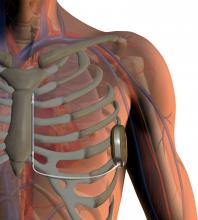
May 6, 2014 — Medtronic announced the first U.S. implant of the Evera MRI SureScan implantable cardioverter-defibrillator (ICD) system, following U.S. Food and Drug Administration (FDA) approval for its investigational device exemption (IDE) application and pivotal clinical trial protocol.


May 6, 2014 — Google Glass and its potential to improve patient care will be the focus of a first-of-its-kind special session at the 2014 Society for Cardiovascular Angiography and Interventions (SCAI) scientific sessions in Las Vegas.


The American College of Cardiology (ACC) annual meeting is a key event where vendors launch new cardiology technologies. After walking the entire expo floor at ACC.14, these are my choices for some of the most innovative new technologies that were on display.


May 6, 2014 — Siemens Healthcare announced the U.S. Food and Drug Administration (FDA) has cleared the Artis one angiography system, optimized for broad clinical utilization. The Artis one is designed for routine interventions, including revascularizations of peripheral vessel occlusions, functional tests of dialysis shunts in patients with kidney failure, diagnostic or minimally invasive angiographic treatment of narrowed coronary arteries, and pacemaker implantations.


As an editor attending clinical symposiums and always on the lookout for new trends in technology, I sometimes find myself wondering if what I see is actually the reality on the ground for most clinicians. A recent example of this has been the implementation and use of clinical decision support (CDS) software to ensure physicians are following appropriate use criteria (AUC).

The fine print in the new Medicare legislation now mandates the use of CDS software to show tests and procedures ordered meet AUC set by medical societies in order to get full Medicare/Medicaid reimbursement.


Subscribe Now