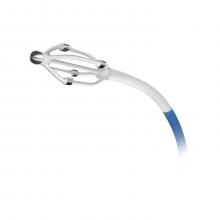
The first patient has been implanted with the Boston Scientific Corporation next generation Ingevity pacing leads in a clinical trial designed to establish the safety, performance and effectiveness of the leads. Pacing leads are insulated wires that connect an implantable pacemaker to the heart for treatment of bradycardia, a condition in which the heart beats too slowly, depriving the body of sufficient oxygen. Pacemakers work in conjunction with leads to sense and stimulate (or pace) the heart, thus maintaining an appropriate heart rate for a given level of physical activity.

Among deployed U.S. service members who died of combat or unintentional injuries between 2001-2011 and underwent autopsies, the prevalence of coronary atherosclerosis was 8.5 percent, with factors associated with a higher prevalence of the disease including older age, lower educational level and prior diagnoses of dyslipidemia, hypertension and obesity, according to a clinical study in the Dec. 26 issue of JAMA.

Pulse Oximetry Screening is a life-saving test that can detect critical congenital heart defects (CCHD) in newborn babies before an infant is discharged from the hospital. The test is easy to perform, however, appropriate interpretation of the results can be challenging. In order to aid health care providers in interpreting the results of the screening, Children's Healthcare of Atlanta has created the Pulse Ox Tool, a ground-breaking app for smart phones that automates the Pulse Oximetry Screening test and improves the accuracy of detecting children with possible CCHD.


The past year in cardiology has continued to see progress and innovation in medicine. As the year comes to an end, the American College of Cardiology (ACC) identified some of the top cardiovascular stories of 2012.


Resuscitation, cell regeneration, a new high blood pressure treatment and developments in devices for treating stroke are among the key scientific findings that make up this year's top cardiovascular and stroke research identified by the American Heart Association and American Stroke Association.


December 28, 2012 — Researchers have discovered that adding lovastatin, a widely used cholesterol-lowering drug, to traditional antimalarial treatment decreases neuroinflammation and protects against cognitive impairment in a mouse model of cerebral malaria.


December 27, 2012 — Cardiosonic Inc., a private developer of technology in the field of renal denervation for the treatment of hypertension, announced it has closed on the first $6.1 million of a planned $16.1 million Series B financing.

Subscribe Now