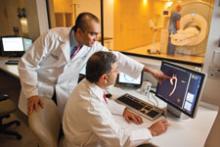
May 15, 2012 — Reaching out to patients with a few simple phone calls significantly improves the likelihood they’ll continue to take critically important medication that keeps blood clots from clogging a new stent, according to a study presented today at the SCAI 2012 Scientific Sessions.


As an editor for DAIC and Imaging Technology News, I am a third-party observer in the cardiac and radiology markets. I also am a  patient who recently received medical imaging. With both these sets of experience, I am of the opinion that physicians often miss an opportunity to connect with their patients in a critical way, one which could increase patient involvement and compliance for treatments and follow-up exams.  


As an editor for DAIC and Imaging Technology News, I am a third-party observer in the cardiac and radiology markets. I also am a  patient who recently received medical imaging. With both these sets of experience, I am of the opinion that physicians often miss an opportunity to connect with their patients in a critical way, one which could increase patient involvement and compliance for treatments and follow-up exams.  


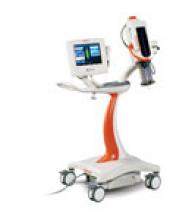
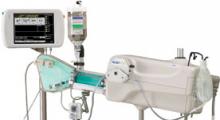
Two next-generation automated contrast injector systems were recently introduced in the United States. 


Medical devices employed for injecting radio-opaque contrast media into the body to enhance the visibility of tissues for a medical imaging procedure are known as contrast injectors. Over the years, with ever-increasing technological sophistication, these contrast injectors have evolved from manual injectors having manifolds with stop-cocks to automated versions, providing added accuracy and advantages. These automated versions are known as autoinjectors. Autoinjectors are capable of controlling the amount of contrast media injected, utilization rate, and are also able to increase dosage to keep pace with fast medical imaging scanners as well as alert the physician of potential hazards, such as air embolisms or extravasations.



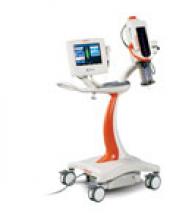
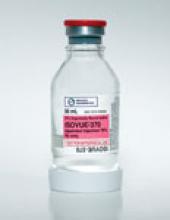
Contrast-induced nephropathy (CIN) is a significant problem resulting from the use of iodine contrast agents in computed tomography (CT) scans and cath lab angiography. It can have a negative impact on mortality. This article outlines some of the key information on the agents themselves, possible methods of action and how to prevent and treat CIN.


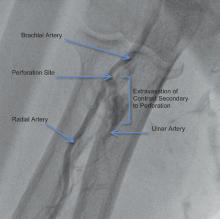
The radial artery approach is exceptionally well-suited for diagnostic angiography and, with a lower incidence of bleeding complications, is a favorable alternative for femoral percutaneous coronary intervention (PCI). The most common complications with the transradial approach are asymptomatic radial artery occlusion (3-5 percent) and radial artery perforation (less than 1 percent).


May 15, 2012 — Boston Scientific Corp. and Philips Healthcare announced a collaboration enabling Philips to sell Boston Scientific Imaging equipment in connection with its Allura Xper catheterization lab systems in territories worldwide.


Methodist DeBakey Heart and Vascular Center in Houston, Tex., has leveraged new imaging and interventional technologies to help contain and reduce costs, increase patient volume and revenues and build a reputation as a state-of-the-art heart center.


Subscribe Now