September 8, 2011 – SynCardia Systems, manufacturer of the SynCardia temporary Total Artificial Heart, announced that Texas Children's Hospital in Houston has discharged its first pediatric Total Artificial Heart patient to wait for a matching donor heart at home. On Aug. 31, 18-year-old Jordan Merecka left the hospital using the Freedom portable driver, a wearable power supply for his Total Artificial Heart.

September 8, 2011 – Intra-aortic balloon pump (IABP) counterpulsation prior to percutaneous coronary intervention (PCI) in patients with ST segment elevation myocardial infarction (MI) does not reduce infarct size as measured by magnetic resonance imaging (MRI), according to results from the Counterpulsation Reduces Infarct Size Acute Myocardial Infarction (CRISP AMI) trial. The results were discussed during the recent European Society of Cardiology (ESC) meeting in Paris, France.

September 8, 2011 – A randomized multicenter, open-label study evaluating the efficacy and safety of prolonged antiplatelet therapy in patients with coronary disease has found that 24 months' duration of dual antiplatelet therapy (DAPT) is no better than six months of DAPT in preventing adverse cardiac events. The study results were discussed during the recent European Society of Cardiology (ESC) meeting in Paris, France.

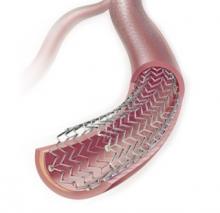
September 8, 2011 – Patients at a high risk for a second stroke who received intensive medical treatment had fewer strokes and deaths than patients who received a brain stent in addition to the medical treatment, a large nationwide clinical trial has shown. The investigators published the results in the online first edition of the New England Journal of Medicine. The National Institute of Neurological Disorders and Stroke (NINDS), part of the National Institutes of Health, funded the trial. The medical regimen included daily blood-thinning medications and aggressive control of blood pressure and cholesterol.


September 6, 2011 — Philips has announced the availability of Xcelera R3.2, the latest release of its multi-modality cardiology image management, analysis and reporting system. It delivers patient information across the care continuum via enhanced connectivity with other hospital information systems and the patient’s electronic medical record.

September 6, 2011 — The European Society of Cardiology (ESC) released the latest version of its guidelines for managing patients presenting without persistent ST-segment elevation. This version replaces earlier editions of 2000, 2002 and 2007. The new guidelines also incorporate the findings of very recent studies.

Subscribe Now