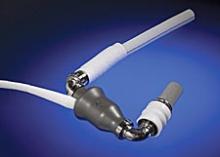
July 19, 2011 — Terumo Heart Inc., a wholly owned subsidiary of Terumo Corp., today announced that a patient implanted with the DuraHeart left ventricular assist system (LVAS) has surpassed five years of support on the mechanical circulatory support device. Helga Gieseke, living in Germany, was treated at The Deutsches Herzzentrum Berlin (DHZB, German Heart Institute Berlin) and is now one of the longest-living heart failure recipients of the DuraHeart LVAS device.

July 19, 2011 — An article published in the July issue of the Journal of Heart and Lung Transplantation reports the first use of the Freedom portable driver with a Total Artificial Heart (TAH-t) patient. The TAH-t is manufactured by SynCardia Systems Inc.

July 19, 2011 - The Society of Cardiovascular Computed Tomography (SCCT) announces the first SCCT Arthur S. Agatston Cardiovascular Disease Prevention Award, recognizing individuals whose pioneering efforts have saved lives from coronary artery disease (CAD). Arthur Agatston, M.D., presented the award to the first recipients at the SCCT annual scientific meeting in Denver, Colo., on Saturday, July 16, 2011.

July 18, 2011 — NSVascular Inc., a newly formed subsidiary of NeuroSigma Inc., has signed an exclusive license with the University of California Los Angeles (UCLA) covering its medical applications of thin-film nitinol (TFN) technology.

July 18, 2011 — OrbusNeich announced that data from an ex vivo arteriovenous (AV) shunt model of human circulating blood, in addition to results from three preclinical studies, demonstrated that the Genous Stent effectively captures circulating CD34+ endothelial progenitor cells (EPCs). This leads to accelerated re-endothelialization and decreased thrombogenicity compared to bare metal stents (BMS). These mechanistic data were published as an e-publication on the European Heart Journal website.

July 18, 2011 — An article published in the European Journal of Cardio-Thoracic Surgery demonstrates the importance of a comprehensive epicardial lesion pattern to confirm conduction block in radiofrequency ablation for the successful treatment of persistent atrial fibrillation (AF). The epicardial ablation device is manufactured by nContact Inc.

July 15, 2011 — TeraRecon Inc. will highlight the accessibility and clinical workflow impact of its iNtuition solution at the sixth annual scientific meeting of the Society of Cardiovascular Computed Tomography (SCCT) at the Hyatt Regency Denver at Colorado Convention Center in Denver, Colo., July 14-17, 2011.

Canada is spearheading an international study to determine if an implantable cardioverter defibrillator (ICD) can prevent death from serious heart rhythm problems in those patients who’ve survived a heart attack. Heart disease is a leading cause of death in Canada and the fastest growing disease worldwide.

July 15, 2011 — Attendees at the 2011 annual scientific meeting of the Society of Cardiovascular Computed Tomography (SCCT), July 14-17 at the Colorado Convention Center in Denver, will learn how Siemens Healthcare facilitates “Sustainable Cardiovascular Care” through its portfolio of products and services, including the Somatom Definition Flash CT scanner and <i>syngo</i>.via imaging software.


Coronary revascularization does not always lead to coronary reperfusion. When readily available, percutaneous coronary intervention (PCI) using primary balloon angioplasty, with or without use of stenting, is the standard of care for ST-segment elevation myocardial infarction (STEMI). However, there is a group of patients who seem not to benefit fully from prompt restoration of antegrade flow, as they fail to show resolution of the indirect signs of ischemia such as electrocardiographic (ECG) changes and improvements in perfusion abnormalities.[1,2] These patients also present an angiographic phenomenon characterized by evidence of slow-flow in the affected vessel (Thrombolysis in Myocardial Infarction [TIMI] flow equal to or less than 2) and lack of contrast uptake “blush” by the subtended myocardium, leading to a potential dissociation between coronary revascularization and myocardial perfusion in STEMI.


Subscribe Now