The transcatheter MitraClip mitral valve repair system continues to compare favorably with conventional open-heart surgery for treatment of select patients with mitral regurgitation. The findings come from updated research from the EVEREST II study presented at the American College of Cardiology’s 60th Annual Scientific Session.


April 8, 2011 — A study from a South Korean research team found that angioplasty with a sirolimus-eluting stent was non-inferior to coronary artery bypass surgery (CABG) in patients with unprotected left main coronary artery disease.


To prevent physician fatigue and back pain associated with wearing protective lead aprons in the cath lab, the ZeroGravity Radiation Protection System offers increased radiation protection without weighing down the user. Using a ceiling suspended gantry system, no weight is placed on the body of the interventionalist and it allows for smooth movement along the X, Y, Z axis.


April 8, 2011 – The U.S. Food and Drug Administration (FDA) has approved an aneurysm treatment system as a Humanitarian Use Device (HDE). NeuroVasx’s cPAX Aneurysm Treatment System can be used to treat large, giant and wide-neck cerebral aneurysms, which are typically the most difficult to treat.

The HDE allows for the treatment of up to 4,000 patients per year in the United States.


A U.S.-Egyptian research team has uncovered the earliest documented case of coronary atherosclerosis in a princess who died in her early 40s and lived between 1580 and 1550 B.C.


The U.S. Food and Drug Administration (FDA) this week released its February list of device and technology premarket approvals (PMA), product development protocols (PDP), supplement and notice decisions.

To review the listing, visit: www.fda.gov/MedicalDevices/ProductsandMedicalProcedures/DeviceApprovalsandClearances/PMAApprovals/ucm250089.htm

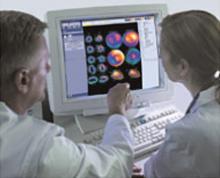
April 8, 2011 – Spectrum Dynamics has installed the second D-SPECT (single photon emission computed tomography) system using cadmium zinc telluride (CZT) nuclear imaging detectors. The new detectors enable a new generation of high resolution, low-dose nuclear cameras.


A transcatheter ventricular assist device performed better than intra-aortic balloon pumps (IABP), with a 21 percent reduction in major adverse events at 90 days.


April 8, 2011 – At the American College of Cardiology (ACC) Annual Scientific Meeting in New Orleans, Siemens Healthcare demonstrated how users of nuclear imaging systems can use its IQ•SPECT to help reduce the length of imaging protocols.

April 7, 2011 – Primary results from the RADAR Phase 2b clinical trial were announced at the American College of Cardiology (ACC) 2011 60th Annual Scientific Session. The trial looked at Regado Bioscience’s Reg1 anticoagulation system.

Subscribe Now