

August 30, 2010 - A system was released in Japan last week that helps guide treatment of cardiac arrhythmias by creating a 3-D cardiac map and model based on the information from electrophysiology (EP) catheters.

August 30, 2010 – According to the results of a late-breaking analysis involving more than 200 000 patients in recent clinical trials, antihypertensive treatments with renin-angiotensin system (RAS) inhibitors significantly differ in their ability to preserve lives.

August 30, 2010 – An enhanced version of the Philips iE33 xMatrix cardiac ultrasound system features a new ergonomic transducer for more efficient adult echocardiograms.

August 30, 2010 - Even though cardiac rehabilitation, a medically supervised program of services, can significantly improve the life expectancy and quality of life of people who have had a recent cardiac event, only one in five eligible patients actually receives this lifesaving and life-improving therapy.

August 20, 2010 – Health Canada granted market approval for the Medtronic Ablation Frontiers Cardiac Ablation System, a radiofrequency (RF) ablation system to treat atrial fibrillation (AF).

August 30, 2010 - The U.S. Food and Drug Administration (FDA) granted clearance for a catheter guidance system.

August 30, 2010 – A portfolio of advanced quantification solutions for 2-D and 4-D ultrasound imaging were added to ScImage’s PicomEnterprise picture archiving and communications system (PACS). It now directly integrates TomTec’s portfolio of echo quantification solutions.

August 25, 2010 - Polymer bottle packaging for contrast media is now included in the GE Healthcare ecomagination campaign. The +Pluspak, a packaging container for contrast media, offers advantages over traditional glass packaging that includes reduced storage, improved workplace safety for healthcare workers who administer contrast media to patients, and decreased cost of waste disposal.


August 25, 2010 - GE Healthcare announced that polymer bottle packaging is now included in the company’s ecomagination campaign. +PLUSPAK, a packaging container for contrast media, offers advantages over traditional glass packaging that includes reduced storage, improved workplace safety for healthcare workers who administer contrast media to patients, and decreased cost of waste disposal.


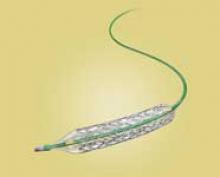
In the world of endovascular devices, the rule is no longer one size fits all. The recent increase in the variety of stents for percutaneous coronary intervention (PCI) offers the physician of a patient with coronary artery disease (CAD) the ability to tailor treatment to the individual patient, rather than tailor the patient to the therapy.


Subscribe Now