December 5, 2007 - Bristol-Myers Squibb will divest its medical imaging division as part of an initiative to maximize the value of its healthcare group.

As part of the restructuring, Bristol-Myers Squibb will cut personnel by 10 percent, possibly resulting in pretax cost savings of $1.5 billion by 2012. It will focus its activities on such key growth products as specialty and biologic medicines and cardiovascular and metabolic drugs.

The downsizing of its labor force started in November and will continue for three years, the company announced.

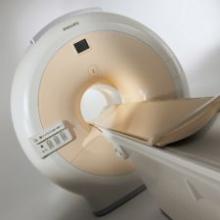
December 5, 2007 - The United Kingdom's Department of Health said today it will begin a new stroke strategy in which anyone in a higher-risk group who suffers a minor stroke will receive an MRI scan within 24 hours to accelerate the emergency response.

The department hopes the new strategy will help prevent up the 6,800 deaths and cases of disability, which occur due to strokes in the U.K. annually. A further 1,600 strokes may also be averted through preventative work, the department said.

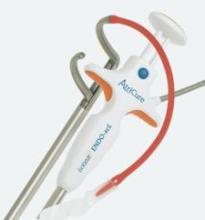
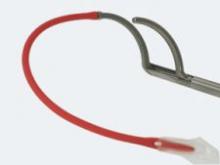
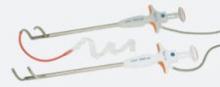
Starion Instruments' TLS3 Tissue Ligating Shears feature Starion’s proprietary thermal welding technology, focusing thermal energy to simultaneously seal and divide soft tissue, reducing thermal spread and collateral damage.

December 4, 2007 - ELA Medical Inc. intiated U.S. enrollment in the OPTION study (Optimal Anti-tachycardia Therapy in ICD Patients without Pacing Indications), which will evaluate therapies and advanced algorithms in optimizing treatment and managing ICD patients.

December 4, 2007 - SRSsoft today announced the Cardiovascular Institute of the South (CIS) has selected SRSsoft Clinical Manager as it transitions to a paperless chart environment.

CIS has 45 providers and more than 475 dedicated team members in 11 locations throughout southern Louisiana. The specialty practice includes cardiologists, cardiovascular surgeons and thoracic surgeons who represent nearly every specialty in heart and vascular medicine.

December 4, 2007 - InSite One’s InDex Archive surpassed 1.5 billion individual images and over 20 million studies stored for over 500 sites nationally, equating approximately three percent or 9 million of the U.S. patient population.

InSite One offers an out-sourced archiving service, which on a weekly basis reportedly receives 12 terabytes of medical information in its Tier-4 data centers.

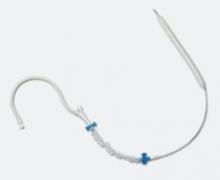
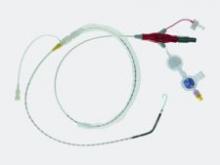
December 4, 2007 – The Impella 2.5, a catheter-based heart pump device, supports high-risk patient’s weakened heart in the Abiomed PROTECT I trial conducted at the Texas Heart Institute at St. Luke’s Episcopal Hospital.

Texas Heart Institute at St. Luke’s Episcopal Hospital was one of the few facilities chosen to participate in the Abiomed PROTECT I trial for the Impella 2.5, the first FDA-approved trial for prophylactic, or preventative, use of a device during high-risk percutaneous coronary intervention (PCI) procedures.

December 4, 2007- Berlin Heart announced the first patient enrollment in the prospective IDE study for its EXCOR Paediatric VAD, a mechanical cardiac support system for critically ill pediatric patients suffering from severe heart failure.

December 4, 2007 – American College of Cardiology CEO Jack Lewin has urged ACC members this week to let "their members of Congress know how bad things are getting” in regards to Medicare cuts.

The Senate Finance Committee will be introducing a package for Medicare physician payment cuts. In the “Lewin Report Blog,” Lewin warns that the ACC’s imaging accreditation and appropriateness criteria pilot may be included in this package.

December 4, 2007 - In general, drug-eluting stents (DES) achieve better results than bare-metal stents do, U.S. researchers report in the November 20 issue of the Journal of the American College of Cardiology.

"We found that DES, as they are being used in clinical practice in North America, significantly reduce the need for target vessel revascularization compared to bare-metal stents," lead investigator J. Dawn Abbott, M.D., told Reuters Health.

"Importantly," she added, this reduction "was observed in patients with and without complex coronary lesion types."

Subscribe Now