July 17, 2007 – Premier, a U.S. healthcare group purchasing organization, announced that it has extended its agreement with Medrad Inc. to provide vascular injection systems and related disposables used in CT, MR and cardiovascular (CV) imaging for an two additional years, in order to provide Premier’s 1,700 hospital members and more than 46,500 other healthcare sites with continued access through 2011 the line of vascular injection systems.

July 17, 2007 - TeachIVUS is a Web-based simulation teaching tool used by cardiovascular health professionals to provide ongoing education in this ever-changing field.

July 17, 2007 - Cordis Corp. announced the introduction in the European market of the Fire Star Rx (Rapid Exchange) PTCA (Percutaneous Transluminal Coronary Angioplasty) Dilatation Catheter, which, according to the manufacturer, provides the lowest pre-dilatation balloon profile in the market.

In October, they gave us fair warning: “If the Deficit Reduction Act goes through…facilities will buy less and less expensive products,” said one participant. Others echoed this, and now the river of anxiety has morphed into a tsunami.
With the DRA here, we re-visit the issue, questioning an industry cross-section to find some surprising issues hiding in the shadows.


On Friday, April 13, 2007, the Centers of Medicare and Medicaid (CMS) released Proposed Inpatient Rules for 2008. Highlights of the proposed rules related to cardiovascular reimbursement include:


The state of cardiology care, today and for the future, paints a glowing — and growing — picture. Whether from echo, EKG, cardiac cath, nuclear medicine, multislice CT or MR, the number of images produced to diagnose and treat a single patient can range from tens to thousands. To help manage the data and guide them in their decision-making, cardiologists rely on cardiology information and image management systems (CIIMS) to access, display, review and archive past and present cardiac studies.
Seamless interfacing, structured reporting


The business phrase “return on investment” or ROI within the healthcare industry often denotes a caricature approach to purchasing that makes it seem like that the person who wants to financially validate an expenditure is not patient friendly. In reality, this notion couldn’t be further from the truth of what a strong ROI process within healthcare institutions should represent.


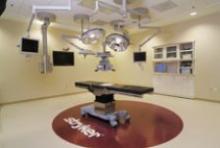
There’s not much about The Wisconsin Heart Hospital (TWHH) that isn’t on the cutting edge of cardiovascular technology, including the way it operates.
The 60-bed Wauwatosa, WI-based hospital was founded as a partnership between cardiovascular, vascular and specialty physicians to offer a patient and family-centered experience. Its design allows patients to remain in the same private room throughout their stay, rather than being moved from surgical intensive care to a telemetry unit to a medical surgery unit.


Just how many deaths each year can be directly attributed to vulnerable plaque (VP) is still being studied. But researchers and clinicians are not underestimating the danger that may be lurking inside an arterial wall.


The three hospitals of the Valley Health system in northwestern Virginia have improved the quality and efficiency of cardiac care by installing Cardiac Science’s Pyramis system to manage data from its diagnostic cardiology devices and to integrate this data with central admission, order and billing systems.

Subscribe Now