

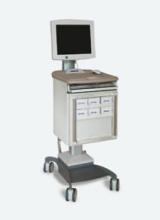
Electronic medical information improves patient safety by providing immediate and complete access to complex patient information. Having access to information reduces medical errors — yet three decades have elapsed since the electronic medical record (EMR) was first conceived and 16 years have passed since the Institute of Medicine's report called for EMRs.
But time isn’t the only thing littering the long road to EMR.


Technological advancements over the years have forced most OR methods used in 1964 into dusty, old history books and museums.
But there’s one test that is still the most widely used in hemostasis management — one that monitors high-dose heparin during surgeries that require intense anticoagulation measures, keeping patients balanced on the fine line between thrombosis and hemorrhage.
And according to Marcia Zucker, Ph.D., the Activated Clotting Time (ACT) test — despite its old age and unpredictability — will become obsolete before it gets changed.


DAIC: What are some of the scenarios — decisions or investments — in which a hospital might want to
consider doing a simulation model first?
Rainer Dronzek: It can really span from upfront in the facility design to when they are actually designing the processes that go into the facility — then there is the actual operational aspect. In many cases we get called because there is a bottleneck or a specific problem to solve.


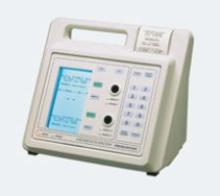
A new spot blood pressure monitoring product from Medwave can now be sold and marketed in the U.S.

Primo is a handheld device that's placed on the wrist and has accuracy comparable to that of an invasive arterial catheter. When on the wrist, the user presses a start key, and within approximately 12 seconds blood pressure and pulse rate values are displayed. The device requires no calibration or routine maintenance, and is compact, lightweight and comfortable for the patient.

Sept. 2006

Subscribe Now