Beginning April 1, Terumo officially launches its own, full-scale marketing and sales program for all its products in the U.S. — including the flagship Glidewire catheter line — which have formerly been sold under the Boston Scientific name. Diagnostic & Invasive Cardiology wanted to know how this change will impact cardiologists and all peripheral interventionalists, and what else Terumo is doing to make doctors’ jobs a little easier.


The drug-eluting stent (DES) market is a multibillion dollar business in the U.S. — and it's estimated that over three million people have received DES worldwide since their approval, representing over 4.5 million DES implantations.
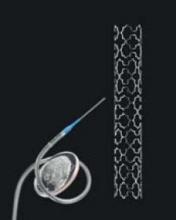
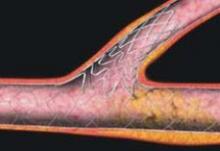
Today, there are two DES devices on the market: Cypher by Cordis, a Johnson & Johnson company, and Taxus by Boston Scientific. These devices have revolutionized the way people live with coronary artery disease.


What factors are driving increased adoption of healthcare information technology, otherwise known as HIT?
Clinical IT and technology in general are getting a lot of focus from the government, from the industry, from clinicians — and the drive to make healthcare safer is what's driving overall growth of clinical IT and technology adoption.


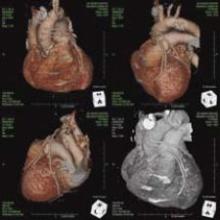
An asymptomatic 75-year-old woman with a history of coronary artery disease, angioplasty, coronary artery bypass grafting, hypertension and hyperlipidemia was referred for 64-slice cardiovascular computed tomography (CVCT) three months post bypass. A Persantine myocardial perfusion study had been conducted one week prior to CVCT to assess graft patency.


Coronary bypass surgery, a difficult and painful way to repair major damage caused by coronary artery disease, may be on its way out — and it’s a long time coming for researchers like Douglas Losordo, M.D. After all, he’s spent the past 10 years looking into the possibilities of adult stem cell therapy as a viable alternative to the procedure.


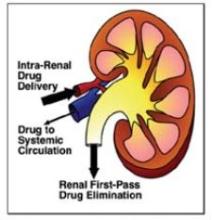
Novelists and playwrights might call it a cruel irony —  heroes who succumb to the powers of evil, true love tragically divided or a good deed that results in suffering. A similarly unjust twist of fate occurs in the cardiologist’s world when, perhaps a day or two following a successful percutaneous intervention (PCI), the patient is afflicted with contrast-induced nephropathy (CIN), a rare adverse event in patients with healthy kidneys, but a potentially fatal outcome with an incidence rate of at least 16 percent among certain high-risk patients.


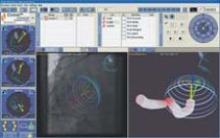
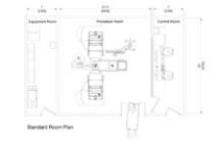
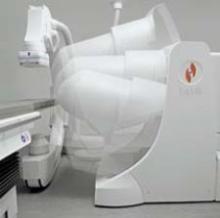
Magnetic navigation technology to direct and digitally control catheter and guidewire devices along complex paths within the heart and coronary vasculature has been evolving since 1990, and magnetic navigation was first employed in a cardiac clinical trial in early 2001 at Barnes-Jewish Hospital in St. Louis.
But in 2003, magnetic navigation really began to come of age and is now being used in more than 40 cardiac cath labs worldwide for both electrophysiological and intracoronary applications.


It struck me the other day that while thousands of healthcare information technology (HIT) executives flock to San Diego for the HIMSS 06 annual conference and exhibition, it’s quite conceivable that thousands of cardiologists are unaware of the important meetings and showcased technologies that will comprise the five-day convention beginning Feb. 12.


Ah, money, money, money — the Frankenstein monster that destroys souls.”
It’s one of many oddball lines from the zany 1930s Carole Lombard and William Powell comedy, “My Man Godfrey,” but it rings true for physicians and other clinicians who know all too well how money has often got healthcare by the throat.


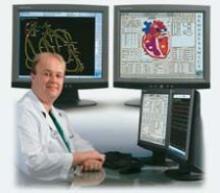
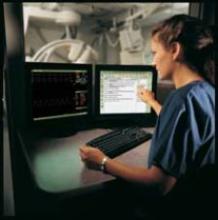
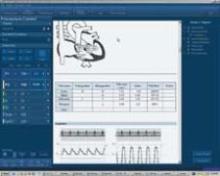
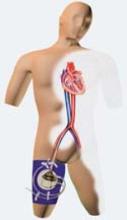
A trend is emerging in cardiovascular image and information systems designed for the cath lab and was apparent on the exhibit floor of ACC.06, the 55th Annual Scientific Sessions of the American College of Cardiology, in March.


Subscribe Now