z.one, the first convertible ultrasound system, provides the flexibility to instantly convert from a full-featured, cart-based system to a compact unit with high-resolution, full exam capabilities. Whether dealing with a routine exam in radiology, or a trauma case in the ER, z.one allows instant adaption to changing patient and exam needs, increasing productivity and improving patient care.

MicroMaxx's purpose-built software and proprietary ASIC design yields high-quality images, while efficiently operating on either AC or battery power. The system boots up to scanning mode in under 15 seconds in a busy office, large hospital or critical care setting. This 7.7-pound device with a small footprint is designed to get medical professionals into, and out of, tight spaces fast.

Siemens’ ACUSON Sequoia echocardiography platform has a new release, adding two new transducers to the system: the 9L4 Multi-D and the 17L5 HD. Multi-D array transducer technology provides uniform elevation focusing for improved contrast and spatial resolution.

Weighing less than 20 pounds, the MyLab30 CV ultrasound system is the first compact ultrasound system to deliver premium console performance. And with mobile, portable or stationary configurations, MyLab30 CV can adapt to any clinical environment.

The Vivid 7 Dimension builds on GE’s imaging platform, acquiring more clinical information in fewer steps. GE’s transducer technology allows the use of only one probe to acquire multiple planes of images at the same time, and from the same heartbeat, without changing probe positions.

Barco has a new suite of clinical application modules available within its flagship 3-D software product, VOXAR 3-D. The CARDIAMETRIX suite provides radiologists and cardiologists with a powerful set of tools for structural and functional analysis of contrast-enhanced Computed Tomography Angiography (CTA) studies.

In a giant leap forward in ICD patient safety, the American College of Cardiology Foundation (ACCF), in conjunction with the Heart Rhythm Society (HRS), established the National Cardiovascular Data Registry's national ICD Registry in the fall of 2005 to measure ICD patient outcomes and track patient trends.


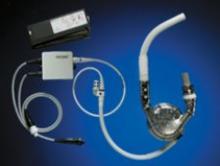
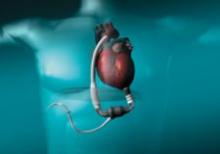
In the simplest of terms, a ventricular assist device (VAD) is a battery-operated mechanical pump that helps a weakened heart pump oxygenated blood throughout the body. While some models offer left, right and biventricular support, others are specially designed to replace the pumping action of only the left ventricle and are appropriately called left ventricle assist devices (LVADs).


When it comes to treating patients suffering from heart failure, which is typically defined as a heart whose pumping power is weaker than normal, physicians are facing a paradox.


In the world of cardiologists who treat adults with congenital heart disease, the unusual is not so very unusual and the rare is fairly commonplace. Take Wendy Book, M.D., for example — this week she might meet for the first time a patient presenting with a heart defect from birth for which there is no standard therapy, and for whom there may well be no exact replica on record.


Subscribe Now