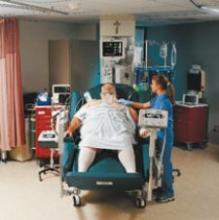
April 10, 2007 — University of California San Diego Medical Center cardiology and neurology specialists are using a novel method to save the lives of patients in cardiac arrest.

Using an innovative technology that rapidly cools the blood, the body temperature of the cardiac arrest patient is lowered, protecting the brain from damage that can result immediately after a heart attack.

Adopted at UCSD Medical Center in October 2006, the technique has been used to save multiple lives and is being implemented at hospitals worldwide.

April 10, 2007 — CryoCor Inc., a medical device company focused on the treatment of cardiac arrhythmias, has announced it was informed by the FDA that the agency will convene an Advisory Panel meeting to review CryoCor's pre-market approval application, or PMA, for the treatment of atrial flutter. The Advisory Panel meeting is expected to be held in June or July 2007, and a decision from the FDA on CryoCor's PMA is expected in August 2007.

The Impella 2.5 circulatory support system, by Abiomed Inc. was among 35 innovative healthcare products to receive a 2007 Medical Design Excellence Award — MDEA is the premier awards program for the medical technology community.

April 10, 2007 —Boston Scientific Corp. has begun notifying physicians some of its implantable heart defibrillators contain batteries that could deplete early, shortening the life span of the devices, Reuters reported.

In an April 5 letter to doctors posted on Web site of its Guidant unit, the company stated that there have been no patient deaths or serious injuries associated with the battery voltage problem.

April 9, 2007 — The FDA has approved Abbott's new coated Niaspan (niacin extended-release tablets) for boosting HDL cholesterol -- the "good" cholesterol.

Niaspan is the only FDA-approved, once-daily extended-release prescription niacin formulation for the treatment of lipid disorders with an ability to significantly raise HDL cholesterol.

April 9, 2007 — MIV Therapeutics Inc. has announced that its recent bench test confirmed that merging Biosync Scientific's certified bare metal stent platform (which MIVT recently acquired) with its own polymer-free drug delivery system met critical "FDA Draft Guidance for the Submission of Research and Marketing Applications for Interventional Cardiology Devices" requirements for in vitro mechanical fatigue testing.

April 9, 2007 — The drug used in Johnson & Johnson’s drug-eluting stent — produced by J&J-owned Cordis — does not infringe on a patent held by Boston Scientific. So rule a U.S. federal judge last week.

U.S. District Court Judge Sue Robinson, Delaware, granted a motion by J&J unit Cordis for summary judgment, saying, "based on the evidence of record, no reasonable juror could find for Boston Scientific on the issue of infringement."

Patent disputes in lower courts had previously ruled in Boston Scientific’s favor.

April 9, 2007 — Possis Medical Inc. has announced that the FDA has approved its AngioJet Spiroflex VG rapid exchange for blood clot (thrombus) removal in coronary conduits.

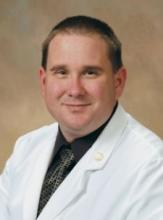
April 6, 2007 — Ohio State University Heart Center has appointed cardiac ultrasound expert Dr. Thomas Ryan as its new director. Dr. Ryan was director of the Duke University Heart Center.

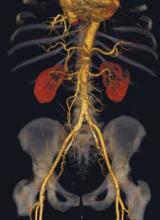
April 6, 2007 — Toshiba America Medical Systems, Inc. has developed three imaging techniques for its MR product line, including the Vantage systems, that allow for contrast free imaging during MRA procedures. Contrast-free imaging is particularly important because gadolinium, the common contrast agent used for magnetic resonance imaging (MRI) and magnetic resonance angiography (MRA) exams, recently has been directly linked to nephrogenic systemic fibrosis, also known as nephrogenic fibrosing dermopathy (NSF/NFD), a sometimes fatal disease that occurs in patients with renal insufficiency.

Subscribe Now