Abiomed Inc. recently announced the start of the IMPELLA 2.5 pilot study in the U.S. with the enrollment of the first patient at William Beaumont Hospital in Detroit, MI. The IMPELLA 2.5 is the world’s smallest ventricular assist device (VAD) and is currently available in Europe under the CE Mark.

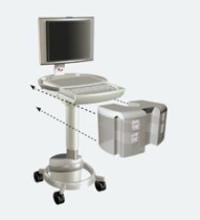
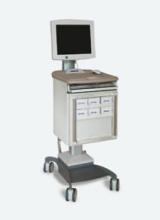
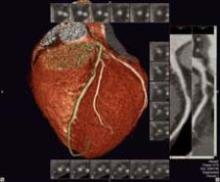
Horizon Cardiology is a cardiovascular information solution that moves organizations one step closer to an enterprise image and information management solution.

The Atlas II ICD (implantable cardioverter defibrillator) and Atlas II HF CRT-D (cardiac resynchronization therapy defibrillator) devices are capable of delivering unsurpassed energy, giving added security to patients whose hearts are especially difficult to defibrillate.

The Rio aspiration catheter is indicated for use in the removal of thrombus from vessels throughout the body and can be used with other interventional devices, such as those used to place stents.

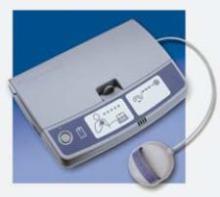
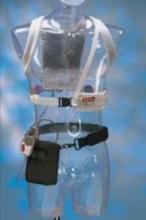
The Welch Allyn Holter Systems are software and recorders designed to help caregivers detect abnormalities in a patient's heart rhythm over an extended period of time. The systems improve patient comfort and compliance with their profile and can be configured with the caregivers' choice of both software and recorders, giving access to the electrical activity of a patient's heart, according to the company.

Two different recorders and two software package options are available with the systems. Both reportedly provide data that help streamline workflow in a doctor's office.


When Russ Johnson looks out the windows of San Luis Valley Regional Medical Center he surveys an area of unmatched beauty and natural wonder. His six-county domain in Colorado, southwest of Pueblo, is the size of six states each the size of New Jersey — yet home to fewer than 50,000.
What he wants for Christmas is a cath lab he can call his own.


A blur has occurred in the very place doctors would normally associate with absolute clarity. An overlapping of departmental PACS has occurred, both in how doctors use them on the front end and what the systems actually are on the back end. And whereas radiology and cardiology departments may once have controlled distinct systems for accessing, managing and archiving their own sets of patient images, a trend toward broad enterprise image management is shifting PACS into the IT domain of CIOs and PACS administrators.


Unlike coronary occlusions that are short and small in diameter, occlusions of the superficial femoral arteries (SFAs) tend to be long and large. Nevertheless, recanalizing these occlusions can be a daunting task, and if left untreated, can lead to serious problems for the patient.
According to a paper published in the Journal of Catheterization and Cardiovascular Interventions, “total occlusions of the femoropopliteal arteries are frequently found in patients with severe claudication or CLI [critical limb ischemia].”


In the cardiac cath lab, success is measured in part by how quickly the patient can ambulate and go home.
With the volume of diagnostic procedures on the rise, hospitals need to get patients through the lab and out the door in a timely manner, according to Paul Buckman, president of St. Jude Medical’s cardiology division. Vascular closure devices are key because, in addition to being more convenient for staff and comfortable for the patient, they allow patients to ambulate sooner than standard manual compression.


Author’s Note: EuroPCR definitely has its own flare. The meeting combined education, exhibits and divertissement.
As meetings go, EuroPCR 2006 was definitely different than meetings that take place in the U.S. Drug-eluting stents (DES) dominated the coronary sessions. To put things into perspective, each year EuroPCR organizers collect data from “high-impact” peer reviewed journals to create a booklet of randomized trials. DES made up 36 pages of this booklet.


Subscribe Now