February 8, 2018 – Calgary Scientific announced a renewed focus on an enterprise cloud strategy, which will support its global network of strategic partners as they adopt and implement cloud technologies.

February 8, 2018 – ScImage, a leading provider of enterprise PACS solutions, is celebrating 25 years of providing innovative imaging and workflow solutions to the healthcare industry.

Society for Vascular Surgery (SVS)

Medtronic plc recently added to its body of clinical evidence supporting the In.Pact Admiral drug-coated balloon (DCB) with new presentations that demonstrated durable and consistent clinical outcomes in peripheral artery disease (PAD). The new data, presented at the Leipzig Interventional Course (LINC), Jan. 30-Feb. 2, 2018, in Leipzig, Germany, included the two-year results from the MDT-2113 study (IN.PACT SFA Japan) and data from a critical limb ischemia (CLI) subgroup analysis from the IN.PACT Global Study.


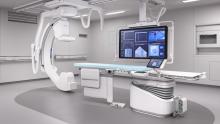
Five new angiography systems were launched in 2017 that included improvements to speed workflow and improve both image quality and interventional procedural guidance.
 

Teleflex Inc. has announced 510(k) clearance by the U.S. Food and Drug Administration (FDA) and U.S. commercial launch of new versions of its Expro Elite and Sympro Elite Snares for manipulating interventional devices in peripheral procedures.


Here is a list of links to recorded session presentations from previous meetings of the American Society of Edocardiography (ASE). Also at the bottom of the list are video interviews with several echo thought leaders at ASE 2017.  For more sessions like these, consider attending the ASE 2018 meeting June 22-26 in Nashville, Tenn. For more information about the meeting, visit asescientificsessions.org/2018-education.


Transcatheter Cardiovascular Therapeutics (TCT)

World Congress Of Cardiology & Cardiovascular Health (World Heart Federation)

High exposure to radiofrequency radiation (RFR) in rodents resulted in tumors in tissues surrounding nerves in the hearts of male rats, but not female rats or any mice, according to draft studies from the National Toxicology Program (NTP). The exposure levels used in the studies were equal to and higher than the highest level permitted for local tissue exposure in cell phone emissions today. Cell phones typically emit lower levels of RFR than the maximum level allowed. NTP’s draft conclusions were released as two technical reports, one for rat studies and one for mouse studies. NTP will hold an external expert review of its complete findings from these rodent studies March 26-28.

Subscribe Now