August 15, 2018 — iBeat recently announced the release and shipping of its iBeat Heart Watch. The heart and blood flow monitoring smartwatch will engage the user and can notify first responders for immediate medical aid if something appears to be wrong.
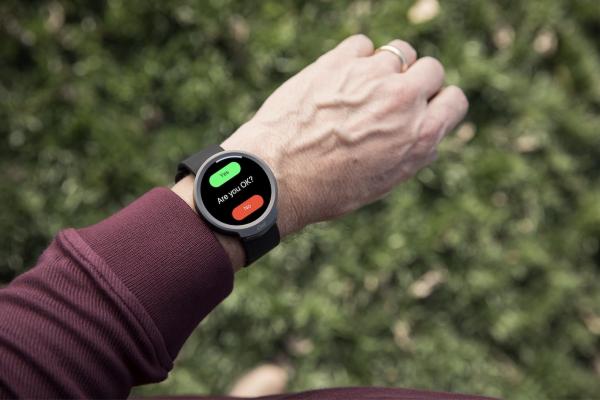
The iBeat Heart Watch looks and functions like an everyday watch, but inside has an array of sensors that measure heart rate, blood flow and other biometrics. These are analyzed in real-time, leveraging artificial intelligence (AI), to look for potentially worrisome changes, such as heart rate or blood flow slowing or stopping. If something appears to be off, the watch will engage the user and ask if everything is okay. If the user confirms the need for help or does not respond, the Heart Watch will automatically connect to the iBeat’s 24-hour dispatch team, who can send the appropriate help – emergency medical services, police, firefighters, friends or family. The watch also has an emergency button that can be pressed at any time to get users emergency or non-emergency aid.
According to the Centers for Disease Control and Prevention, every 43 seconds, someone in the U.S. suffers a cardiac emergency, and emergency response time can make the difference between life and death. Because these emergencies are often unwitnessed and can happen anywhere, the iBeat Heart Watch has the potential to reduce delays in emergency response times, which could save lives and possibly prevent a user from suffering brain damage or organ failure.
Features of the iBeat Heart Watch include:
- Continuous heart rate and blood flow monitoring – Looks for changes in real-time and alerts the user when there might be a significant or potentially serious change;
- Dispatch and emergency contact notifications – Immediately notifies iBeat’s 24-hour dispatch team, the user’s emergency contacts, and if needed, 911;
- Emergency help button – Can be pressed at any time to get aid from friends, family, loved ones or emergency services;
- No smartphone or wi-fi needed – Equipped with built-in cellular functionality that can send and receive calls for help; no phone, Wi-Fi, or Bluetooth pairing is required to set up or use the watch;
- Built-in GPS – Alerts responders and designated contacts to the user’s exact location in an emergency;
- User dashboard – Shows overall heart health, activity levels, location and any emergency-triggered incidents; and
- Heart Hero Network – Access to the network that makes aid available to anyone, anywhere. With more than 1 million people trained in first aid and cardiopulmonary resuscitation (CPR), the network will be automatically alerted if a nearby iBeat Heart Watch user suffers a cardiac emergency.
While the iBeat Heart Watch is intended for use as an everyday watch or for those with a heart concern, it is also an ideal replacement and upgrade from the antiquated medical alert devices currently on the market, according to the company. Most medical alert systems are pendants that brand the user as sick or elderly and require the user to stay tethered to a base station – unable to be used outside the home. They do not have the ability to measure cardiac parameters or automatically call for help. In contrast, the iBeat Heart Watch is a stylish watch that gives users the freedom to go anywhere they want, whenever they want, and keeps them within reach of immediate emergency or non-emergency aid.
iBeat is pursuing U.S. Food and Drug Administration (FDA) approval for use of its Heart Watch as a medical device and recently partnered with two of the top leading life insurers and reinsurers, Transamerica and SCOR Global Life, to extend longevity.
For more information: www.ibeat.com

 March 04, 2026